
-

Cash management, Technology
AI in corporate treasury:
what are the barriers to adoption?
Data issues and slow integration/adoption are preventing artificial intelligence’s full potential from being realised in corporate treasury. Dr Tobias Miarka of Crisil Coalition Greenwich examines what this means for businesses and treasurers
MINUTES min read
A new report from Crisil Coalition Greenwich reveals that around half of large companies globally are yet to deploy artificial intelligence (AI) in their corporate treasury departments, while those that have started have made only limited progress.1
The stuttering progress means that treasurers aren’t fully realising the efficiency boost they anticipated from investments in AI. This experience, and treasurers’ struggles to leverage this new technology, might have broader lessons for companies around the world wondering why ROI on AI is falling, at least for now, short of expectations.
Taking treasury into the boardroom
Almost every company and every corporate department are betting heavily on AI. But corporate treasurers have an extra reason to hope these investments pay off.
Over the past few years, the role of corporate treasurer and treasury departments has undergone a significant transformation. Traditionally, the treasury function has often been viewed (incorrectly) as largely operational, with primary responsibilities centered on the transactional business of managing the company’s daily cash and liquidity.
The digitisation of business and the deployment of powerful data analytics have changed that picture completely. Today, the treasury department serves as the central processing unit of the company, both the operational centre of the organisation and a key repository of information on the financial state of the business. In an article for flow in June 2025 I noted that CFOs and other senior executives are increasingly looking to the data and analytics power housed in the treasury department for insight into high-level strategic decisions, amid a complex and evolving business environment.
“Corporate treasurers now have an important seat at the C-suite table”
As Figure 1 (below) shows, corporate treasurers now have an important seat at the C-suite table, as they help senior leaders improve their confidence in making strategic decisions. Nearly two-thirds of corporate treasurers taking part in Crisil Coalition Greenwich research from April 2025 say they are almost always included in C-suite conversations about risk management and hedging strategies, and nearly the same proportion almost always participate in C-suite decisions about capital structure and funding decisions. Treasurers now have a voice in senior leadership discussions on a host of other critical topics as well. Meanwhile, CFOs and other senior leaders are increasingly asking corporate treasurers to draw on their data, analytics and execution capabilities to head up large, strategic projects.
However, as the C-suite leans on treasurers for more information, analysis and projections, the treasury department still has its day job. With additional strategic responsibilities taking up more time, corporate treasurers have a pressing need to create efficiencies across their department. Enter AI.
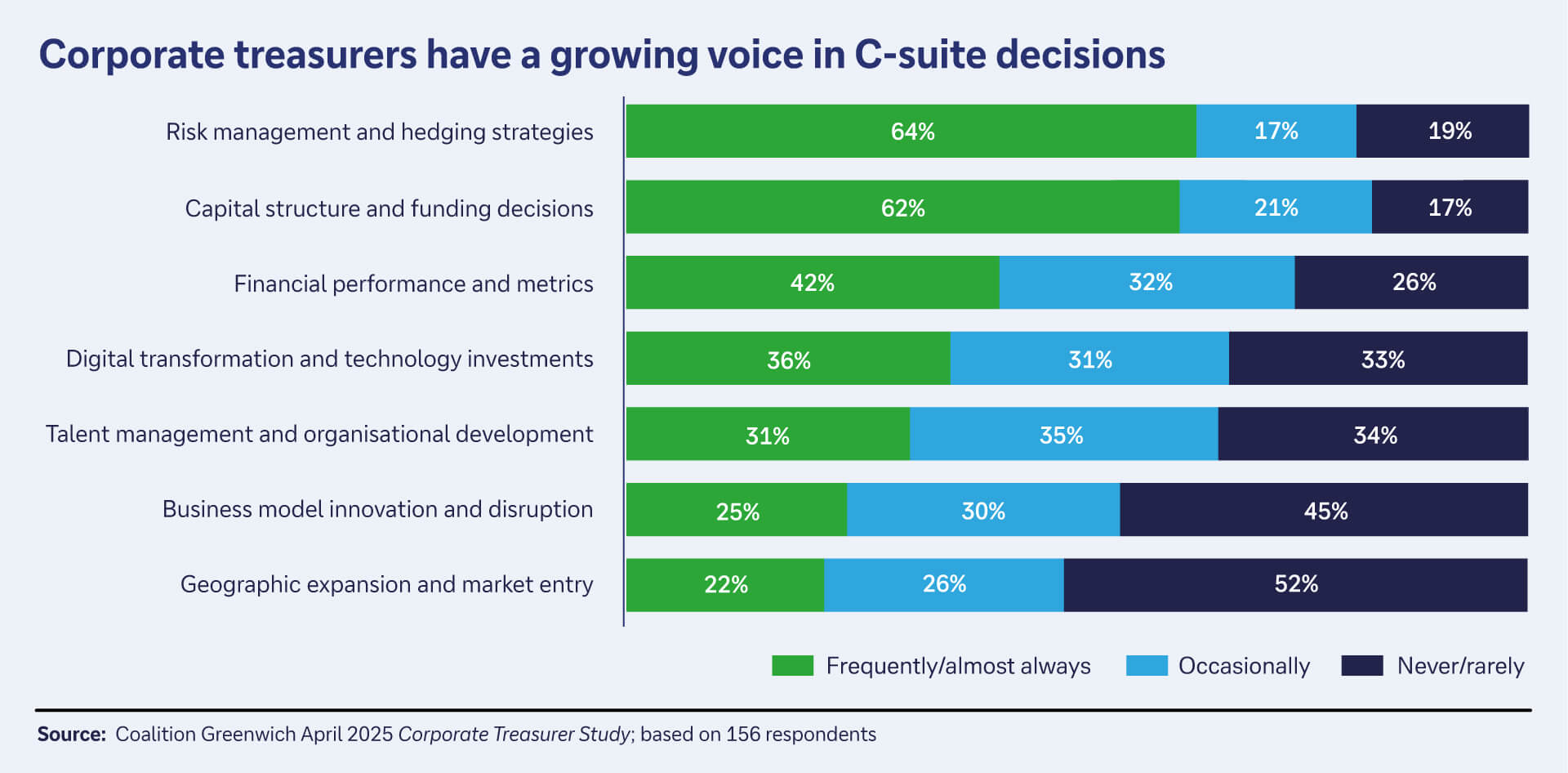
Figure 1: Corporate treasurers have a growing voice in C-suite decisions
Limited progress
Data from Coalition Greenwich’s July 2025 Treasury AI Insights Study reveals that while half of the 119 large global corporates surveyed have committed resources to deploy AI in their treasury departments, companies have made varying, and for the most part limited, progress actually implementing AI into workflows in a way that can meaningfully impact performance.
Most companies that have started using AI in treasury are still in the exploration phase, researching potential use cases and running initial pilots. Fewer than 1 in 10 have implemented AI into daily workflows in areas like forecasting and fraud detection, and only a handful claim to be in the process of deploying AI at scale across multiple treasury functions. In both the US and Europe, not a single company purports to have reached the stage of strategic deployment, in which AI is embedded in treasury strategy and decision-making.
Treasury departments that have implemented AI are using it most often for automation. In terms of AI integration, automating manual tasks represents low-hanging fruit. Automation solutions are relatively easy to create and deploy, and the fast gains they can produce are invaluable to treasurers desperate for efficiency enhancement.
Three-quarters of corporate treasurers surveyed cite automation and savings as the primary benefit they are receiving or expect to receive from AI investments. They emphasise the potential for efficiency gains, cost savings and error reduction through the automation of bank account reconciliation, cash positioning, trade processing, and other functions.
Pinpointing obstacles to AI adoption
The findings raise an obvious question: why has progress been so slow when it comes to both adoption and effective implementation? The Treasury AI Insights Study reveals what treasurers see as the primary barriers to AI adoption – see Figure 2 below. Two obstacles stand out: a lack of in-house expertise and integration hurdles.
The first of these issues is problematic, but relatively straightforward to address. Companies need to hire more AI experts and data scientists and train professionals throughout the organisation on the use of the technology. In treasury and elsewhere, companies should focus on developing AI ‘champions’ who encourage experimentation and use of AI, both at the strategic level and in daily workflows.
The second issue – integration hurdles – is more vexing and more central to the struggles companies have had achieving ROI expectations from AI investments. Put simply: AI applications run on data, ideally clean data in fact, and most companies aren’t capable of delivering it, or at least not in the quantity and quality required.
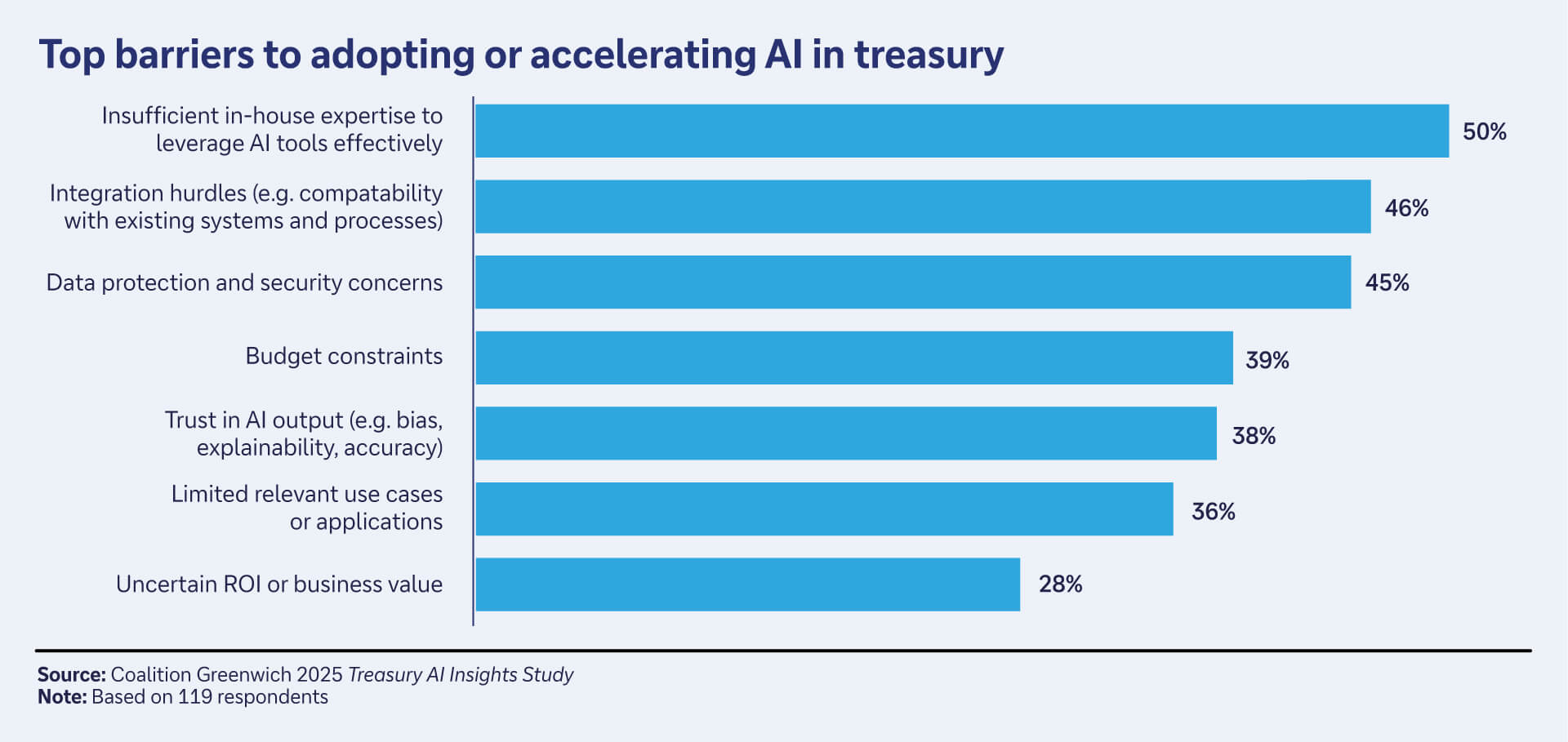
Figure 2: Top barriers to adopting/accelerating AI in treasury
The central mistake: neglecting data
The central mistake many companies are making with their AI investments in treasury and other departments is allocating resources to AI solutions without first building the data infrastructure and management systems needed to effectively operate those solutions. Companies are skipping the foundational work and jumping ahead to the ‘sexier’ job of building and buying AI tools. This, I believe, is the fundamental reason companies are failing to achieve expected results.
This mistake is understandable. With the AI hype intensifying, CEOs are under pressure to capitalise on the revolutionary technology. As a result, they are green-lighting investments in AI. As they do so, they know that boards and investors are clamouring for deals with major AI providers and headlines about the arrival of cutting-edge AI solutions. These audiences are unlikely to be impressed with an announcement that the company is directing a large part of those AI investments toward rebuilding internal data management architecture.
But that is exactly what’s required. There is a near-perfect correlation between data governance and the ability to scale AI. Without the ability to produce seamless, timely and accurate data, companies will never be able to integrate AI at scale in treasury – or anywhere else. The unfortunate reality is that many large companies run on outdated legacy technology platforms composed of siloed systems that don’t interact well and store data in multiple locations, often in varying and incompatible formats. As illustrated in Figure 3, this data fragmentation presents an inherent barrier to AI adoption, often limiting companies to isolated applications, such as intelligent process automation in a specific workflow. Data fragmentation is one of the primary reasons treasury department staff still spend nearly a third of their time working in spreadsheets.
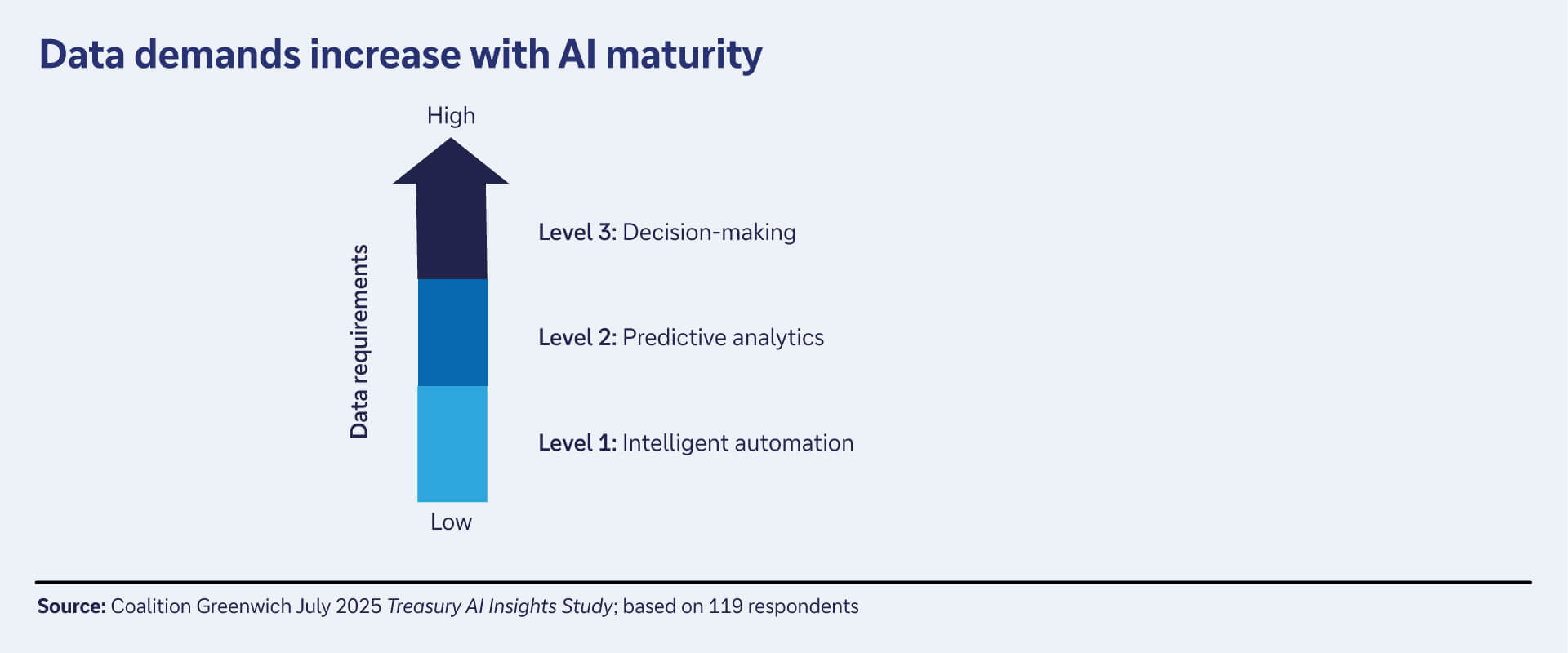
Figure 3: Data demands increase with AI maturity
Building an AI-ready foundation of data governance
To realise the hoped-for benefits of AI, companies will first have to conduct the less-glamorous groundwork of establishing sound data governance and management. At a strategic level, senior leadership should focus on five priorities:
- Establish data quality standards and assurance processes. Data rationalisation enables the adoption and scalability of AI solutions by providing the necessary foundation and infrastructure, leading to quicker implementation and better utilisation of AI capabilities.
- Document data lineage. To have confidence in AI results, companies must know where ingested data came from, how and when it has changed, and what it’s been used for. Tracking data lineage is critical to establishing trust in AI output and auditability. As AI models accelerate and evolve using various data versions, maintaining a clear lineage of the data that trains each model becomes essential.
- Acquire high-quality training data in abundance. Companies must create pipelines that rationalise and integrate structured and unstructured data, and build ingestion engines that help reduce data latency and enhance data security and compliance. Delivering transparency must be a top priority. Transparency in training data allows business users to understand how the AI model operates, enhances trust in results and allows subject-matter experts to request adjustments.
- Evolve a shared responsibility model. Developing a robust data governance model for successful AI implementation will require a cross-functional team. Guided by an expert governing body, this team will set risk standards, audit AI systems, and guide business and development teams in complying with regulatory and organizational standards.
- Invest in data literacy across the organisation. Professionals at every level must understand the critical importance of sound data, the requirements of good data governance and the potential benefits the company and its employees can derive from the combination of effective data management and innovative AI. Education and upskilling can help leaders overcome the shortage and costs of talent and expertise, and third-party governance providers can deliver quick access to tried-and-tested solutions.
“There is a near-perfect correlation between data governance and the ability to scale AI”
Next steps for corporates
About 60% of large global corporates expect to increase their investments in AI. For companies that take this step without addressing foundational issues of data management and governance, it could be a case of throwing good money after bad. It is impossible to implement sophisticated AI solutions like predictive analytics and decision-making without a comprehensive source of reliable and timely data.
Over the past few years, too many corporate treasury departments have learned that lesson the hard way. At a time when treasurers and treasury staff need efficiency enhancements more than ever, an inability to produce seamless and clean data has been one of the biggest factors slowing the adoption of increasingly powerful and capable AI solutions.
The good news for companies and corporate treasurers alike is that an answer is at hand. Companies can unlock anticipated ROI on AI in treasury departments and across organisations if they are willing to roll up their sleeves and tackle the hard work of revamping legacy systems and establishing processes for sound data governance. Data integration by sound data governance was an aspiration way before the AI wave we are now witnessing. However, it was often deemed difficult, costly and ultimately something to be tackled at a later stage. Given the leverage AI has to offer, the rewards attainable by finally tackling this foundational date challenge have never been greater.
Dr Tobias Miarka leads Crisil Coalition Greenwich’s Corporate Banking research globally and advises international as well as domestic banks on strategic client service and product issues that result in profit-enhancing and sustainable solutions. He is also affiliated with the ESCP Business School where he teaches Banking and Fintech related subjects as part of the school’s Master in Management programme
Sources
1 See AI in corporate treasury: What causes slow adoption, preventing full potential? at greenwich.com



You might be interested in

Cash management, Technology {icon-book}
How technology is taking treasury into the boardroom How technology is taking treasury into the boardroom
Corporate treasurers will have to embrace innovative technology to meet new challenges facing their departments and rising expectations from the C-suite. Dr Tobias Miarka draws on Crisil Coalition Greenwich research to explain the practical implications

Technology, Macro and markets
AI deep research – is this a gamechanger? AI deep research – is this a gamechanger?
The flurry of AI deep research launched at the beginning of 2025 has significant consequences for knowledge workers – and the global economy. flow shares insights from Deutsche Bank Research’s paper that identifies winners and losers – and AI’s capacity for longer-term self-improvement

Sustainable finance, Technology {icon-book}
How AI is reshaping the energy transition How AI is reshaping the energy transition
As artificial intelligence (AI) drives innovation across sectors, it’s not only fuelling technological progress, but also significantly increasing electricity demand. Deutsche Bank’s Lavinia Bauerochse describes how this development is transforming the global energy transition – and why investments in grid expansion and transition finance are taking centre stage