
-

Trade finance and lending, Macro and markets
Commodities 2026: the Hormuz factor
The commodity finance community gathered at TXF Amsterdam 2026 to examine how recent events in the Middle East have impacted the trading, producing and financing of key commodities. flow’s Clarissa Dann reveals how traders are diversifying their funding sources and strategically utilising their facilities
MINUTES min read
Three months after the conflict in the Middle East erupted, the restrictions on oil tanker traffic passing through the Straits of Hormuz are “depleting global oil inventories at a record pace,” reports the International Energy Agency.
However, the IEA adds that the crisis began with the market in surplus – and this sense that we have yet to see the full impact of these cumulative supply losses set the tone for TXF’s Global Commodities Summit, held in Amsterdam 11–12 May 2026.
While this article was written before the mid-June announcements of a ceasefire deal with Iran and the reopening of the Strait of Hormuz, the longer term impact of the crisis on access to energy and the commodities trade (and how it is financed) continues to shape the global economic outlook.
Upstream and downstream impact
In the Summit’s opening Economist’s Address, Saad Rahim, Chief Economist at commodities trader Trafigura explained the fallout from the war in Iran is “moving from East to West” and “we are seeing the impact starting in Asia with major demand destruction”, which has extended to Australia and Africa. But Europe and the US had so far been relatively unaffected because of “buffers in the system”, namely the surplus in January and February, which is now being rapidly used up with inventories dropping fast.
According to Rahim, around nine to 10 million barrels per day (b/d) of crude and a further four million b/d of oil product is being lost from the Gulf. The effect downstream on diesel, jet fuel and gasoline is already evidenced by higher prices and shortages.
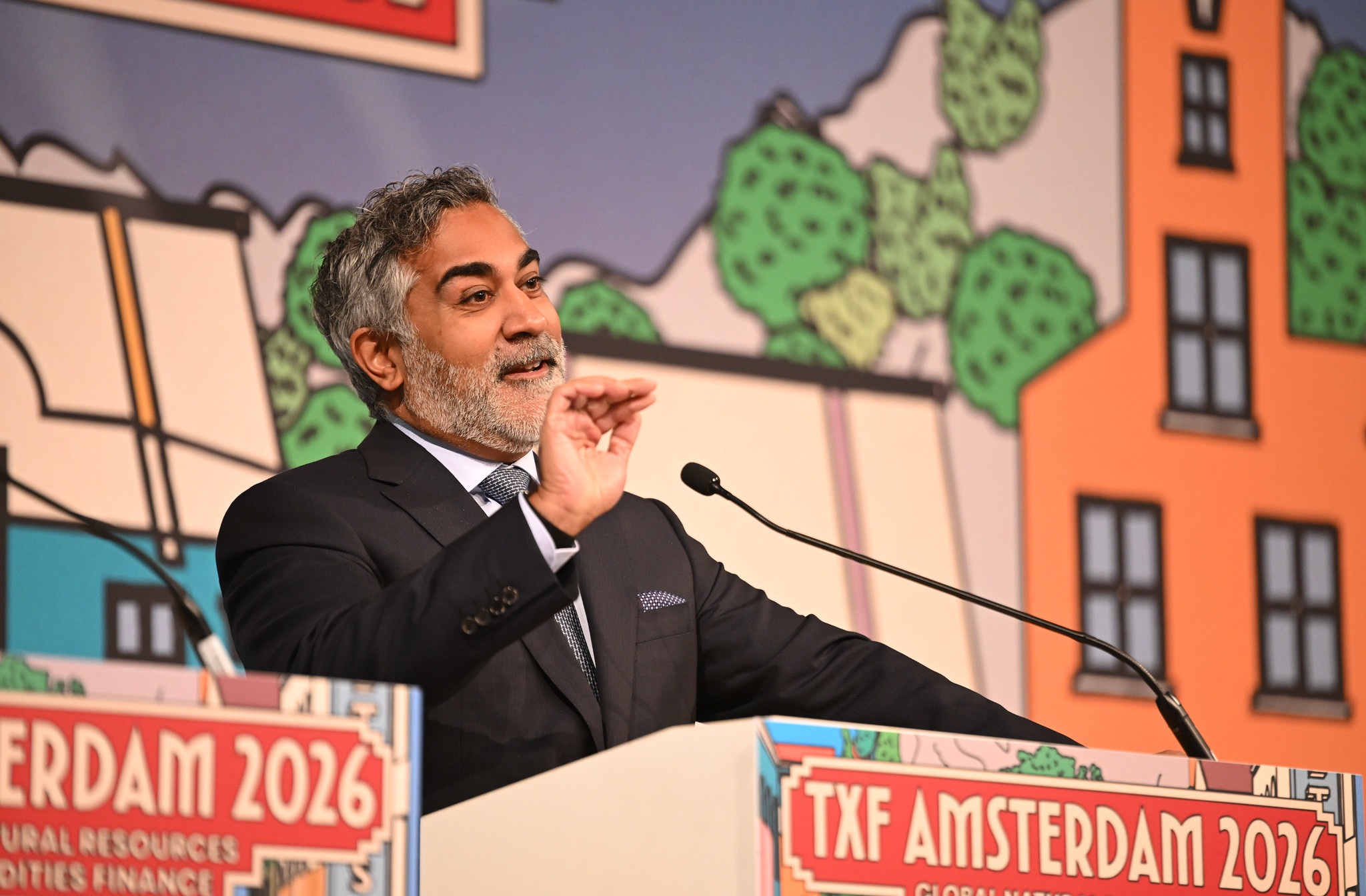
Saad Rahim, Chief Economist at Trafigura explains the impact of falling crude inventories
An end to the conflict does not, he explained, bring an immediate bounce-back to a pre-conflict position and it will take some time to recover capacity.
Next up was the Economist Intelligence Unit’s commodities and Macro Economist Kona Haque who outlined what the disruption means for food and agriculture. “Hormuz impacts a third of fertiliser suppliers around the world” she said, and the Middle East is a huge producer of ammonium nitrate – a byproduct of natural gas. Following the February 2022 invasion of Ukraine, high crop prices protected farmers from the worst impact of a jump in fertiliser costs. But the current crisis has seen no such protection.
By way of background, modern food systems are structurally dependent on fertilisers for crops feeding billions of consumers. The UN Food and Agriculture Organization (FAO) reports that around 1.07 billion people rely on food produced from imported nitrogen fertilisers.1
“It looks like the world is in denial of the crisis”
Haque added that with Northern Europe’s farmers harvesting grain for export this September, its immediate fertiliser needs have already been met but she anticipates a jump in forward contract prices in advance of the winter. This same point was emphasised in a joint statement on 29 May – two weeks after the conference – from the WTO, IMF, IEA and World Bank. “The effects of the conflict are disproportionately affecting the most vulnerable countries through higher fuel and fertiliser prices, increased uncertainty, and risks to jobs and livelihoods. Higher fertiliser prices are of particular concern as many countries enter the planting season,” they warned.2
Dancing on a volcano
The above-titled macro-focussed session was moderated by Jean-Francois Lambert, founding partner of Lambert Commodities, who spoke to flow a week later. “The world is dancing on a volcano, and we are in the midst of probably the most critical crisis you and I will have witnessed in our lifetime,” he said. “But it looks like the world is in denial of the crisis. Even if we get out of the war situation, life in the Gulf is not going to resume as if nothing had happened.”
Daily supply has decreased by 10+ million to 95 million barrels of oil a day (bpd) when demand is still holding around 104 million bpd. This gap is unsustainable and inventories (of crude and also products such as diesels, jet fuel and petrochem industry feeds), which have buffered the imbalance so far, are shrinking rapidly. Prices will rise, hence pressuring demand which will therefore reduce (as high prices become the solver of high prices). This process is underway in Asia (China suppressed 2.5 million bpd imports in April) and is likely to reach the US and Europe if the Hormuz crisis stays unresolved.
Lambert noted that the impact so far has been confined to the East, but “not for long”, circling back to Rahim’s point about global inventories being drawn down at a record pace. As the WTO/IMF/IEA/World Bank statement predicted: “If shipping flows do not return to normal, continued rapid depletion of global oil inventories ahead of peak summer oil demand in the Northern Hemisphere would present increasing risks for fuel security, market conditions, and broader economic resilience.”3
The volatility and anxiety about future availability of crude (rather than its affordability) works well for the large trading houses – and the banks that lend to them. “Only they have optionalities and can find solutions to ensure a safe supply come rain or shine and this is what makes them totally strategic today and epitomises the reason for their very existence,” said Lambert. Bank facility utilisations were, he added, “large” after 18 months of “very poor utilisations” as the commodity prices were ebbing low. “Now the large, sturdy and robust trading houses (so fine from a risk perspective) are using their lines to finance cargoes above US$90 per barrel.”
Trader perspective
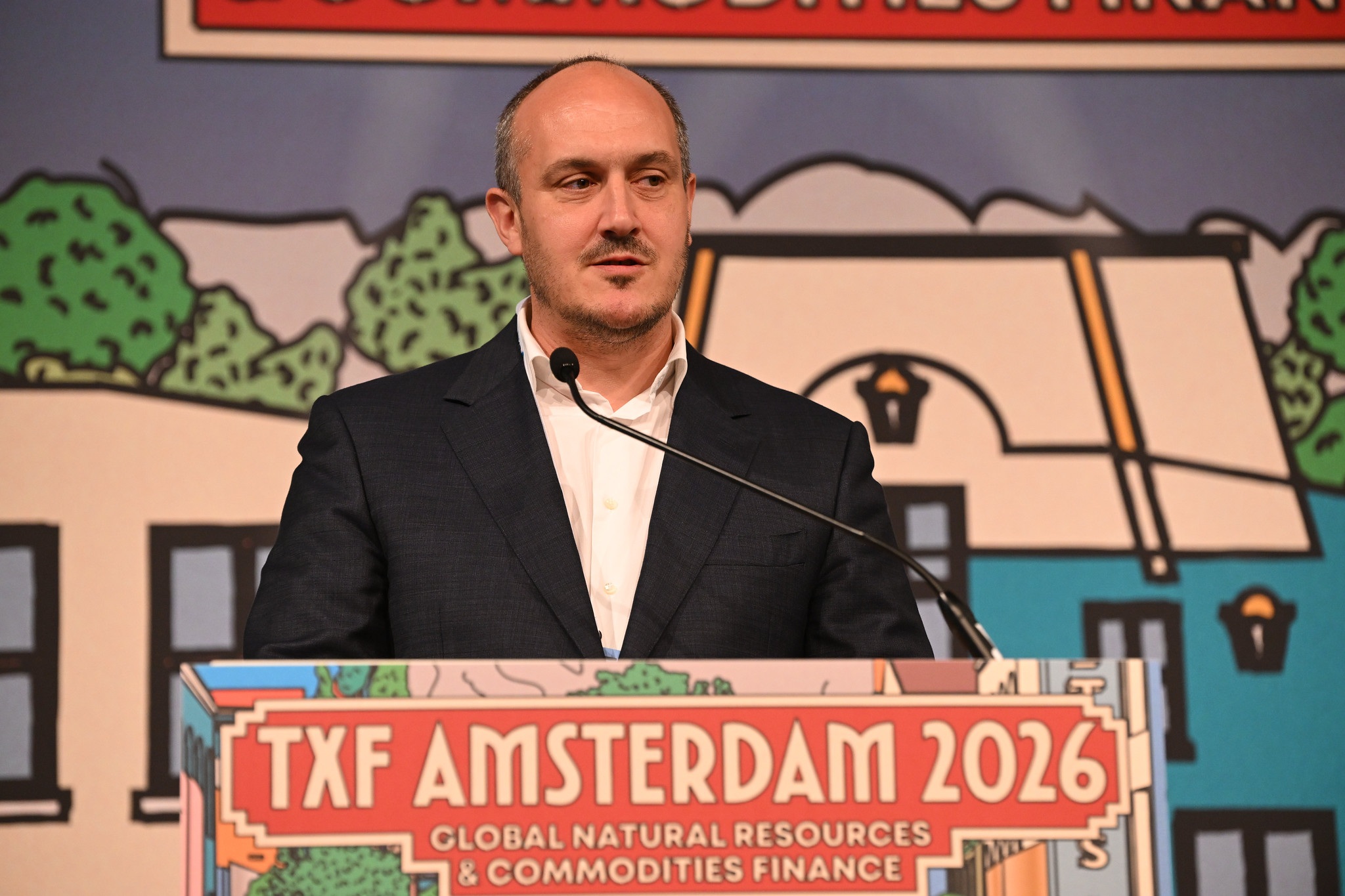
Alexandre Dietz, Head of Trade and Structured Finance at Gerald Group
Turning to the trading houses, panellists in a session moderated by lawyer Catherine Lang Anderson from A&O Shearman, agreed that while traders “love volatility” and make their money from it, that is a different business model from, say, mining. Diesel pricing went from US$700/tonne to almost US$2000/tonne, explained Alexandre Dietz, Head of Trade and Structured Finance at Gerald Group, which “may hit hard on the economics”.
The US-based company is among the world’s largest metals and minerals traders and also has mining operations covering, as it states, the “entire commodity value chain from sourcing, mining and processing and marketing to logistics, hedging, risk management, and structured finance solutions”4. In January 2026, Gerald Group announced the closing of a US$365m revolving credit facility up from the previous year’s US$230m.5 With deals like this, liquidity is not an issue at the moment but, as energy, industrial and shipping group Duferco’s CFO Sander Stuijt asked, “What happens if the banks lose their sense of humour?” The panel discussed the importance of diversifying funding sources. Dietz recalled how Trafigura first tapped German export credit agency Euler Hermes to secure gas supplies6, and is now on to their third guaranteed facility announced in February 2026.7 “It is good liquidity to be tapped and there is appetite for critical minerals,” he said.
Reflecting on the Summit’s discussions, Deutsche Bank’s Barry Pieters, Head of Natural Resources Finance Amsterdam said that the Dutch capital’s annual event is “an excellent opportunity to exchange perspectives”. He added, “The current global environment brings challenges but also great opportunities to the wider commodities industry.”
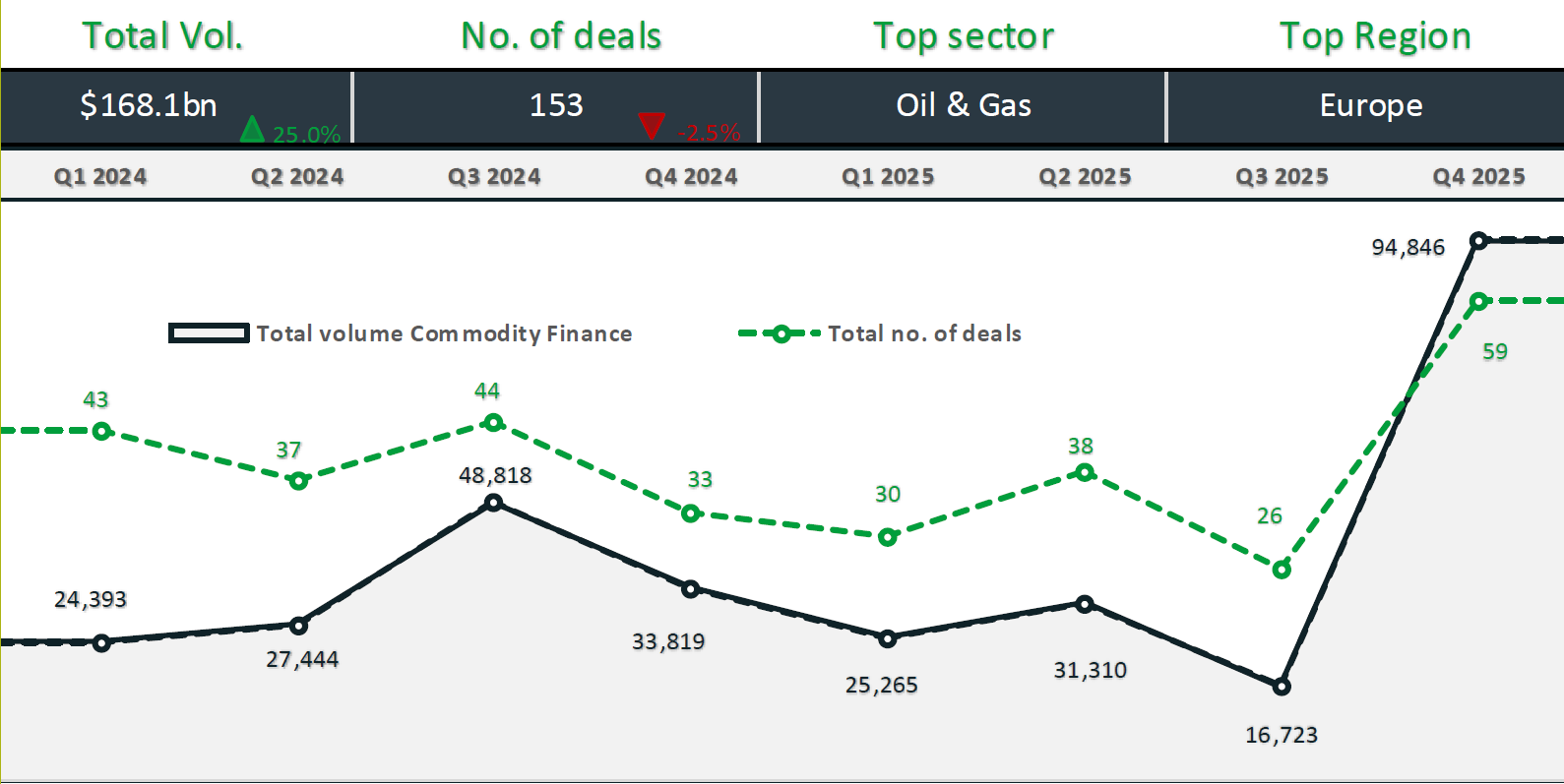
Figure 1: Market overview
Source: Exile Group
A look at the Commodity finance report – 2025 from TXF Intelligence (9 March 2026)8 confirms how the commodity trade finance industry has responded to a new period of instability after several years of “relative calm”. However, when viewed alongside the wider geopolitical picture, ongoing fragmentation of the post-1945 international system is a recurrent theme. “Geopolitical volatility has become less a temporary disruption and more a structural characteristic of the international system,” commented Deutsche Bank Research analysts in their World Outlook issued 1 June.9
This sense of volatility becoming business as usual could be one reason why the TXF reported overall 2025 commodity finance volumes were up 25% year on year, from US$134.5bn to US$168.1bn. The number of deals closed across the year fell slightly from 157 to 153 but remained stable. Their data demonstrates the prevalence of large transactions that required larger syndications – a trend that seems to have continued into early 2026, judging by press releases on trader websites. In 2025 the number of highly syndicated deals of 10 or more lenders sits at 55, up from 35 in 2024 (see Figure 1). As for how 2026 will pan out, with facility utilisation up and availability of crude a greater concern than its price for the larger trading companies, it could be a busy year.
Sources
1 See Strait of Hormuz crisis exposes fertilizer supply risks and food security pressures at foodingredientsfirst.com
2 See Joint Statement by the Heads of the International Energy Agency, International Monetary Fund, World Bank Group, and World Trade Organization - News - IEA at iea.org
3 See Joint Statement by the Heads of the International Energy Agency, International Monetary Fund, World Bank Group, and World Trade Organization - News - IEA at iea.org
4 See Gerald Metals - Metal Trader United States | Gerald Group at gerald.com
5 See Gerald Group has announced the sixteenth annual refinancing of its committed unsecured Revolving Credit Facility RCF at gerald.com
6 See Trafigura signs USD3 billion loan agreement guaranteed by the Federal Republic of Germany to secure gas supply | Trafigura at trafigura.com
7 See Trafigura signs USD1.1 billion loan agreement to support the long-term supply of critical metals to German industry | Trafigura at trafigura.com
8 See Data reports - TXF at txfnews.com
9 World Outlook: 1999 meets 1990 by Jim Reid and David Folkerts-Landau, Deutsche Bank Research, 1 June 2026


You might be interested in
Trade finance and lending, Macro and markets
What next for global energy? What next for global energy?
With a negotiated settlement to end the war in Iran not as yet confirmed, what does this mean for global trade with energy prices at current levels? flow’s Clarissa Dann examines insights from Deutsche Bank Research and key international agencies and reflects on what this means for trade finance demand
Trade finance and lending, Macro and markets
Europe’s energy stress test Europe’s energy stress test
How will this latest Iran oil shock impact the global economy, and what does this mean for ramping up Europe’s competitiveness? flow’s Clarissa Dann shares geopolitical insights from expert speakers at the 3–5 March 2026 BAFT Europe Forum
Trade finance and lending
Securing raw materials Securing raw materials
As economies seek to make sure they have access to critical commodities in the wake of tariff wars and military escalation, the trading landscape is changing. flow reports key themes from TXF Amsterdam and EIT RawMaterials in Brussels