
-

Trust and securities services, Technology
Ready for take-off: scaling digital assets
As digital assets move from proof of concept to application, banks face a number of operational and regulatory challenges. Sabih Behzad, Head of Digital Assets and Currencies Transformation at Deutsche Bank, shares what it takes to scale digital assets responsibly
MINUTES min read
After more than a decade of experimentation, digital assets and tokenisation are edging closer to regular, real‑world use. Regulators have sharpened their focus on how tokenised money, securities and collateral can reshape market infrastructure, and global banks and other financial institutions are working alongside standard setters to put in the infrastructure needed for scale and widespread adoption.
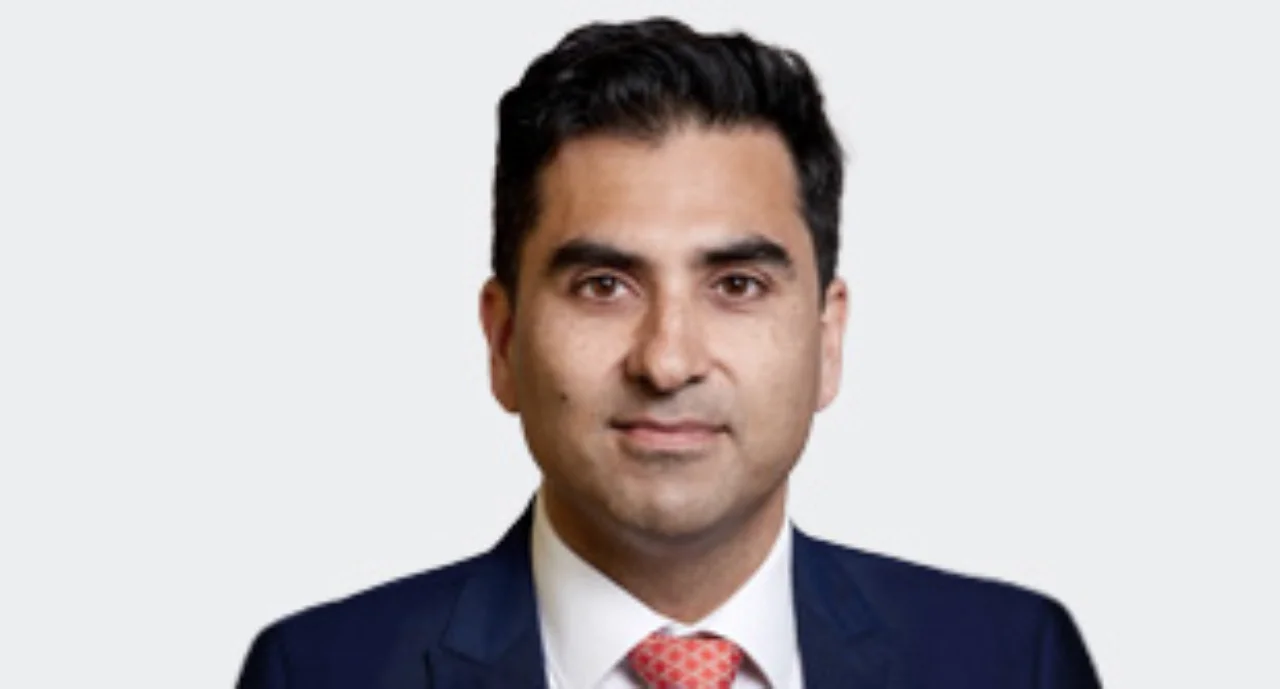
Sabih Behzad, Head of Digital Assets and Currencies Transformation at Deutsche Bank, joined the CryptoReg Insights podcast on 8 April, hosted by Polina Evstifeeva, to chart Deutsche Bank’s digital assets journey, and share practical lessons on what it takes to move from proof of concept to implementation. This article shares amended extracts from the podcast in conversation form.
Sabih, you come from a traditional banking background and have experience across Deutsche Bank. Can you share this journey?
I joined Deutsche Bank in the M&A space as a banker, having been at Lehman Brothers. I’ve had the privilege of working across different divisions for 16 years – the Investment Bank, our tech and operations function, and running our global KYC programme.
What brought me into this role – and keeps me really excited about it – is the confluence of technology, banking and clients: the ability to work very closely with clients on problem-solving and coming up with new and innovative solutions.
What moved digital assets at Deutsche Bank from an interesting concept to a board-level priority?
The bank had been looking at digital assets and distributed ledger technology (DLT) for a few years in some shape or form, but it wasn’t formalised under a single banner and one team.
One trigger was client interest. Deutsche Bank has also been on a journey to streamline and make its operations more efficient. Even a cursory look at DLT raises the question of whether it can be used internally to operate faster, better and with more transparency.
There was some competitor momentum, but our reaction wasn’t driven by any single competitor. Most things in the digital asset space require network effect. They require banks and other institutions that support the financial services sector, such as central securities depositories (CSDs), to move in unison – it’s about laying new plumbing. As that maturity happened, it became obvious that Deutsche Bank wanted to participate and play a leadership role in the areas we have particular expertise in.
Were cultural or organisational shifts necessary internally to see traction?
The external market had to be mature enough to justify moving beyond experimentation. Internally, Deutsche Bank was looking for more efficient ways to operate across the trade lifecycle – right across issuance, trading, settlement, custody, and all the other services we provide.
You also need internal champions – people who believe standing still is not an option and that re-innovating is an important aspect of the evolution of banking. We were fortunate to secure that support and have the right stakeholders to give the initiative traction.
Can you share your favourite digital assets project you've been involved with?
It’s a bit like asking someone to choose their favourite child! The projects that stand out have a few common threads. First, projects must go beyond experimentation. In business functions, it’s important that what we build has the potential to become a scalable product or service for our clients.
Second, there is a huge amount of talent in this space. The projects we’ve really enjoyed are those where we work across a wide spectrum to meet a common objective. With industry initiatives like Project Agora1 you get to work with leading people across different banks and financial market infrastructures. The opportunity to work with talented, cutting-edge folks is really exciting.
How do you measure success? What KPIs matter?
Many banking products and the technology that underpins them developed over decades, so developing KPIs is a far easier task because there’s a demonstrable track record of the product or service. In the digital assets realm, some KPIs are the same: client adoption, revenue, and cost. However, there is an understanding that ramp up takes longer because many initiatives require an ecosystem featuring other players.
Over time we will need capabilities built out in the digital asset space across every part of that trade lifecycle I mentioned. Even if adoption isn’t high on day one, those capabilities are critical to the ecosystem we’re building.
“Innovation without regulation simply doesn’t scale”
What are the biggest risk areas when establishing digital asset products?
Technology risk is significant. This is a new technology and institutions don’t have experience running these types of technologies at scale. You need to start small, prove capability and expand from there. Cybersecurity is a key part of that, particularly around how data is stored and how private keys can be accessed or compromised.
Then there are regulatory risks. We’re in a much more fortunate state than we used to be from a regulation perspective, but we still don’t have unanimity around key regulations. Banks have to carefully navigate the different jurisdictions they want to work in. In terms of financial crime risk there have been instances of crypto being used for illicit purposes, so strong risk and control frameworks are critical. Client demand and scalability are also key considerations.
How important is the regulatory framework when launching a product/service?
Regulation is actually an enabler not a blocker, especially for large financial institutions like us – without it we can’t scale. Jurisdictions may diverge, but the direction of travel is broadly aligned, which is very heartening. In Europe, the Markets in Crypto Assets Regulation2 provides a great foundation. Regulators are almost co designers in early market structures. Ultimately innovation without regulation simply doesn’t scale.
How important are partnerships in scaling digital asset capabilities?
Absolutely critical. Banks understand scale, regulatory compliance and integration. They move at a slower pace but that’s by design, it’s there because banks provide trust. Fintechs have very quick design cycles, high levels of technical expertise, and an open-source mindset, so they’re able to effectively and quickly create monetisable products. Bringing those worlds together is vital if we’re to find scale in the digital assets arena.
Which digital asset products are gaining the most traction?
Tokenised money is a major focus, whether that’s stablecoins or tokenised deposits. We’re seeing lots of discussion around tokenised collateral [see the April 2026 flow article ‘How tokenised assets transform liquidity management’].
The movement of collateral today is a relatively clunky process. It can take a few days to settle and be subject to mismatches and errors. Tokenised collateral offers a level of precision and speed that would be hard to achieve through any other means. I think that’s an actual use case. There’s also a huge opportunity in intraday markets, and intraday repo in particular. These are not experiments for the sake of experiments. These things have got real world value and use cases attributed to them.
What infrastructure is still missing for digital assets to scale?
There’s work to be done on creating the standards that enable interoperability. Multiple blockchains will exist, but standardisation provides an opportunity for scale. Regulatory alignment also matters. Full global standardisation isn’t realistic, but greater commonality and alignment would be a positive step.
More sovereign involvement could accelerate development, such as governments issuing their own securities in tokenised form, or deepening their involvement in developing these markets. I do think that will help fast-track development in this space.
Looking three to five years ahead, what changes do you expect? And what advice would you give your team?
The advice is patience. Progress has taken longer than expected, but things are accelerating now. The big change will be that transition to intraday. We’re going to see money and assets move with the sort of velocity we can only imagine today. Near instant settlement will reduce risk, increase efficiency and lower costs for clients, allowing them to fund and run their operations much more effectively than they can do today.
This article is a summary of the CryptoReg Insights podcast – Episode 15, ‘Inside the Vault: banks’ Digital Assets Journey’, held on 8 April 2026. Click on the link to listen to the podcast in full
Sources
1 See Project Agora: exploring tokenisation of cross-border payments at bis.org
2 See Markets in Crypto-Assets Regulation (MiCA) at esma.europa.eu



You might be interested in

flow white papers and guides
Digital Money – a perspective on stablecoins, tokenised deposits, and CBDCs Digital Money – a perspective on stablecoins, tokenised deposits, and CBDCs
This new white paper explores the digital money landscape – spanning stablecoins, tokenised deposits and central bank digital currencies – the regulatory and market forces shaping it, and how these changes are impacting financial institutions, corporate treasury and custody models

Trust and Securities Services
Europe’s T+1 transition: lessons, readiness and what firms need now Europe’s T+1 transition: lessons, readiness and what firms need now
With Europe’s October 2027 T+1 transition deadline now firmly in scope – and its practical complexities crystallising – flow securities services correspondent Janet du Chenne meets the Deutsche Bank Trust and Securities Services team translating US lessons, internal readiness work and industry guidance into coordinated client action

Trust and securities services
How tokenised assets transform liquidity management How tokenised assets transform liquidity management
Collateral mobility and settlement efficiency are central for liquidity management, and as real-time settlement moves from theory to infrastructure, a transformation is underway explains Deutsche Bank’s Monica Bolqvadze. However, for this to work, interoperability, underpinned by common data models, smart contract standards and messaging protocols is essential