
-
Trust and securities services, Technology
Five questions on AI in custody, clearing and fund services
What does the future of post-trade look like in the age of artificial intelligence (AI)? This ‘flow special’ deep dive finds out by posing five key questions
MINUTES min read
Custody is an industry built on trust, control and human expertise. But what happens to that industry in a future where billions of semi-autonomous AI agents are part of everyday operational workflows, and managing ‘agentic fleets’ becomes as commonplace as managing settlement efficiency?
That’s the challenge and opportunity that the post-trade industry must grapple with when determining how to deploy AI at scale, with the aim of improving outcomes for clients.
As generative AI (GenAI) – a form of artificial intelligence that creates content in response to human prompts – becomes embedded in day-to-day operations, firms are also testing and piloting ‘agentic AI’ as they explore the next frontier of operational and client-facing use cases. Unlike GenAI, which primarily supports human decision-making, agentic AI in post-trade operates with a level of autonomy, executing delegated tasks and decisions within defined governance frameworks.
This article explores five questions on the future of custody and fund servicing in the AI era, drawing on insights from Deutsche Bank experts and The ValueExchange CEO Barnaby Nelson.
1. How is AI currently used in custody and fund services?
A survey of the global post-trade community, AI in the real world – published by industry research firm The ValueExchange in September 2026 in partnership with the International Securities Services Association (ISSA)1 – highlights that the use of GenAI has moved from pilot stage to widespread implementation, with 49% of 205 surveyed firms using ‘live’ GenAI to support business processing, and 80% using it in some capacity. Agentic usage remains at an earlier stage – only 11% of firms have agentic AI in production, while 38% are still piloting the tech.
Operational efficiency and cost reduction is cited as the number one aim of AI adoption on both the sell side and buy side, with 71% of firms revealing this as a core objective.
Boon-Hiong Chan, Industry Applied Innovation Lead, Head of Securities & Technology Advocacy APAC, Trust and Securities Services at Deutsche Bank, agrees that the industry is currently zeroing in on operational efficiency, but highlights that AI, at least in its current iterations, should serve as an investigation, interpretation and servicing layer, rather than the control layer provided by human oversight.
“AI should not guess what the system already knows,” says Chan. “Its current role is around the core operational function such as interpreting unstructured documents, investigating breaks, retrieving rules, finding similar historical cases and helping teams reach accurate answers and communicate faster [see boxouts below].”
Deutsche Bank’s Smratee Jain, Head of Digital Products & Client Connectivity, Trust and Securities Services, who sits on ISSA’s Evolving Technologies and AI Working Group,2 believes industry GenAI use is firmly baked in, but agrees the focus is on realising operational efficiencies via GenAI, with agentic usage still largely in the ‘sandbox’: “Everyone is focused on simplifying processes and automating manual touchpoints, while keeping humans in the loop. Very few firms are using autonomous AI regularly.”
One area of operations where AI is already delivering tangible value is around settlement fail prediction. Machine-learning technology (MLT) – sometimes referred to as ‘traditional AI’ – has been used for years to identify transactions at risk of failing, enabling earlier intervention and exception prioritisation. Recent advances in AI are extending these capabilities beyond prediction to include root-cause analysis, real-time risk monitoring and recommendations for corrective action, helping firms reduce settlement risk across the trade lifecycle.
In Europe, market participants have both eyes trained on the pending transition from T+2 to T+1 settlement, which will take place on 11 October 2027 – see the flow article, ‘Europe braces for T+1’. The risk of settlement failures automatically increases under a compressed settlement cycle, as less time is available to correct errors.
AI can help with this challenge. Euroclear, which operates a network of European central securities depositories accounting for over 60% of EU settlement, launched an updated version of its EasyFocus platform in June 2025, with the aim of supporting the industry’s transition to T+1 and delivering a more harmonised client experience.3 Its Smart Directory AI engine is a core part of the revamped EasyFocus+ offering, “using AI to re-write the settlement story”.4
The ValueExchange CEO Barnaby Nelson says that AI is chiefly being used in low-risk areas: “AI is doing most of its work where the risk is lowest. Client servicing, data aggregation and testing lead the way. Settlement sits further back, and that’s regulation at work, not reluctance. Asset servicing is an area I'd watch. The gap between ambition and reality might be wide, but this will change as confidence and capability improve.”
In custody, AI can help sell-side teams:
- Understand requirements and unstructured inputs faster
- Manage exceptions faster
- Retrieve the relevant market rule
- Identify similar historical cases
- Explain likely causes and draft client or counterparty messages
In fund services, AI can help sell-side teams with:
- NAV breaks
- Price exceptions
- Cash and position breaks
- Fund-document extraction
- Investment restriction interpretation
- Audit queries
- Regulatory reporting
- Private-market document handling
2. How will AI change the industry over the next two to three years?
Chan identifies that although the industry is still in the nascent stages of AI adoption, over the next two to three years it’s set to undergo a “shift from labour-intensive servicing towards an operating model where technology would continuously support trust, control and market intelligence”.
T+1, digital assets, market volatility, extended market hours, data complexity, and enhanced control expectations are just some of the factors that will make custody and fund servicing more complex over the coming years. Custodians and other stakeholders need to adapt to this new operating environment, and AI can help teams manage this increasing complexity.
The ValueExchange survey indicates that AI use for core post-trade functions is “more planned than live”, with AI yet to make the full transition from internal productivity into everyday operations. That looks set to take place over the next couple of years, with reconciliations, asset servicing and trade matching/settlement all showing strong planned adoption. Organisations are predicting that AI’s ‘expected business impact’ across the value chain will rise by 56% over the next three years, highlighting both the headroom for growth, and the fact that adoption is a work in progress.
Improving operational processes will remain a core focus over the coming years. In this context, Kirsten-Anne Bremke, Data & AI Tribe Domain Lead at Deutsche Bank, highlights the opportunity for firms to go beyond using AI for individual tasks and “bits and pieces”. She argues organisations must embed it across end-to-end operational workflows to capture its full benefits. This means building AI in, rather than bolting it on. She suggests firms that commit to this “re-engineering” could see significant efficiencies across the operational value chain.
“AI is going to radically change the custody operating model”
Chan expects to see a workforce evolution over the coming years, especially in relation to graduate hiring practices, with firms likely to evaluate AI literacy and its application to the post-trade environment, while creating pathways to build the market expertise needed to oversee more AI-enabled workflows. A November 2025 McKinsey report quantifies this cross-industry evolution, noting that demand for AI fluency among US job applicants increased by 700% over the two-year period from mid-2023 to mid-2025.5
Humans will remain in the loop, according to David McNally, who heads up Custody and Fund Services Transformation at Deutsche Bank Trust and Securities Services: “This is a people business, and it will remain that way. We’ll have more people working on client relationships, which gives space to create deeper, better relationships.”
Nelson expects to see digital agents handling routine exceptions end to end within 10–15 years, but feels the industry remains cautious about agentic autonomy: “Firms still want a human in the loop. I'd expect that to loosen slowly, but process by process and not overnight – it’s a marathon not a sprint”.
3. How will custody clients benefit?
Some of the advantages for global custodians and financial market infrastructures (FMIs) are highlighted in question one – but what of the end benefits for ‘buy-side’ fiduciary clients in the operational value chain?
AI tools – for example intelligent documentation processing such as docutize.ai – can help asset servicing teams interpret large volumes of operational and market information more efficiently, allowing custodians to provide clients with earlier insights.
“The client benefit is not ‘AI’,” confirms Chan. “The benefit is fewer failures, faster and more accurate answers, earlier warning, better market interpretation, and less operational drag.”
Client value can be distilled into five practical outcomes:
- Earlier action: missing milestones, failed conditions and visibility gaps are spotted before they become end-of-day problems.
- Lower operational burden: ops teams focus on the small number of transactions that need attention, not the whole pending book.
- Faster answers: AI can help explain breaks, retrieve relevant rules, provide account opening details, summarise documents, prepare customised reports and reduce time spent searching across emails, procedures and market notices.
- Better fund-servicing outcomes: clients benefit from faster NAV break explanation, price exception investigation, cash and position break analysis, audit support, regulatory-reporting support and document handling.
- More usable market intelligence: clients provided with timely and incisive interpretation of regulatory, custody, access, repatriation, settlement, and infrastructure and market-practice changes, rather than just raw alerts.
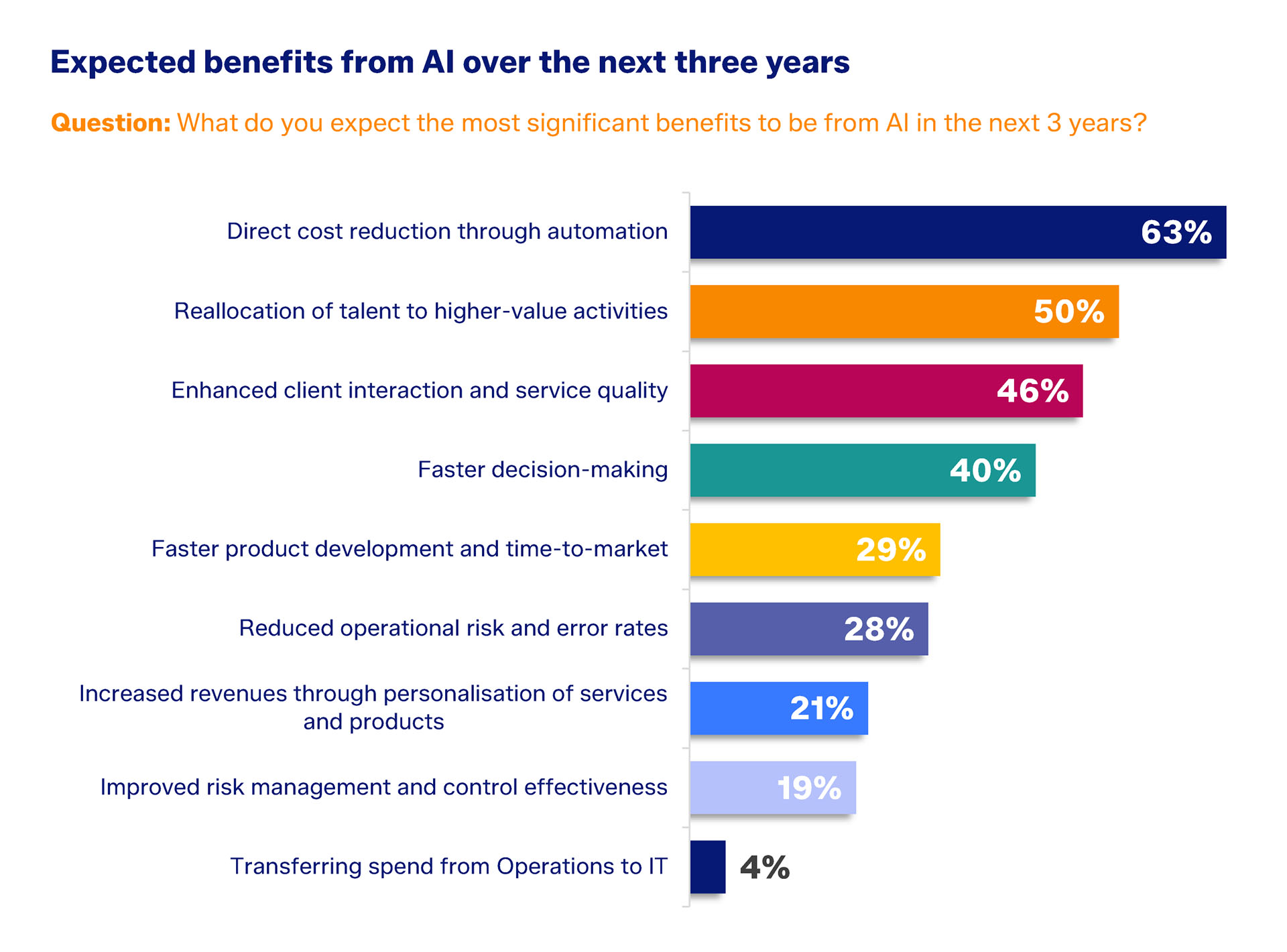
Figure 1: Expected benefits from AI over the next three years
Source: The ValueExchange, AI in the real world survey, September 2026
4. What are the most important hurdles for the industry to overcome?
AI models need clean, accurate data to work effectively. From a technical standpoint this entails common transaction identifiers, structured operational events, market and client master data, document repositories, market-rule libraries, lineage, entitlements and access controls. But data quality across the industry is often poor, with nuances across global markets leading to a lack of standardisation. This is a particular problem for cross-border settlement, where poor data leads to a lack of visibility across the trade chain, resulting in avoidable failures. A compressed settlement timeline under T+1 could exacerbate this issue.6 If good data is a foundational necessity, could AI adoption fall at the first hurdle? Not according to Bremke, who believes that while the data clean-up isn’t a quick fix, the industry will eventually get there.
In The ValueExchange survey ‘data privacy and security concerns’ is cited as the leading barrier to preventing faster AI adoption – see Figure 2 below. Worries around security are unsurprising given recent headlines around instances of large language models attempting to hack into private systems during both sandbox exercises and in the real world.7 Institutional-grade cyber security can help safeguard client data, but fiduciary clients must also have confidence in custodian partners and FMIs to manage that data securely and compliantly. As Nelson points out: “Having a policy and running one well are different things. Trust is the thread currently.”
Custody is a highly regulated, high-volume environment where efficiency, accuracy and resilience are paramount. Against this backdrop, the use of agentic AI poses obvious issues. Certain regions, particularly Europe and parts of Asia, have made significant progress in establishing AI governance frameworks,8 but global governance remains fragmented, with overlapping rules and differing regulatory approaches creating complexity for multinational firms. Regulatory frameworks also risk playing catch up to a technology that is evolving at speed. Safety frameworks could help close this gap by providing an additional layer of control as agentic AI develops. The Monetary Authority of Singapore’s Safeguards for Agentic Finance at Runtime framework offers one such example, verifying and recording an AI agent’s proposed actions before execution.9
Custodian banks are responding to the challenge by building their own AI governance frameworks that define how models can be used, as well as the proper and regulatory compliant processing of client data used in these models. But fully autonomous models – for example agent-to-agent communication via ‘digital employees’– are a governance headache for custodians. This is also the case for ‘no and low’ code models, which allow people to ‘drag and drop’ agents and apply them to specific use cases.
“Having a governance policy and running one well are two different things”
Ultimately, greater autonomy for AI places greater emphasis on accountability. If something goes wrong, banks and regulators will be expected to clearly explain how a material decision was reached, and what authority had been delegated. This speaks to a bottleneck Chan identifies, in moving responsibly from experiments and prototypes to production. He points out that “the future could increasingly see AI checking AI before a case reaches a human. That makes verified agent identity, robust infrastructure, clear limits on authority delegated to the AI, layered evaluation, audit trails, resilience, governance and maintenance even more important”.
Staffing could also be a hurdle. In a future agentic environment, there will likely be a need for specialised sub-roles, such as exception management specialists, agent supervisors, and agent product owners. But organisations will also need employees with deep market expertise to challenge AI outputs and provide effective oversight, as AI systems become more autonomous. Meanwhile graduates may arrive AI-literate, but will need to be taught market expertise and how to apply AI responsibly within a regulated environment. If inexperienced or junior employees are being asked to judge the outcomes of AI models, which can evaluate millions of data points within seconds, could this actually create an additional risk?
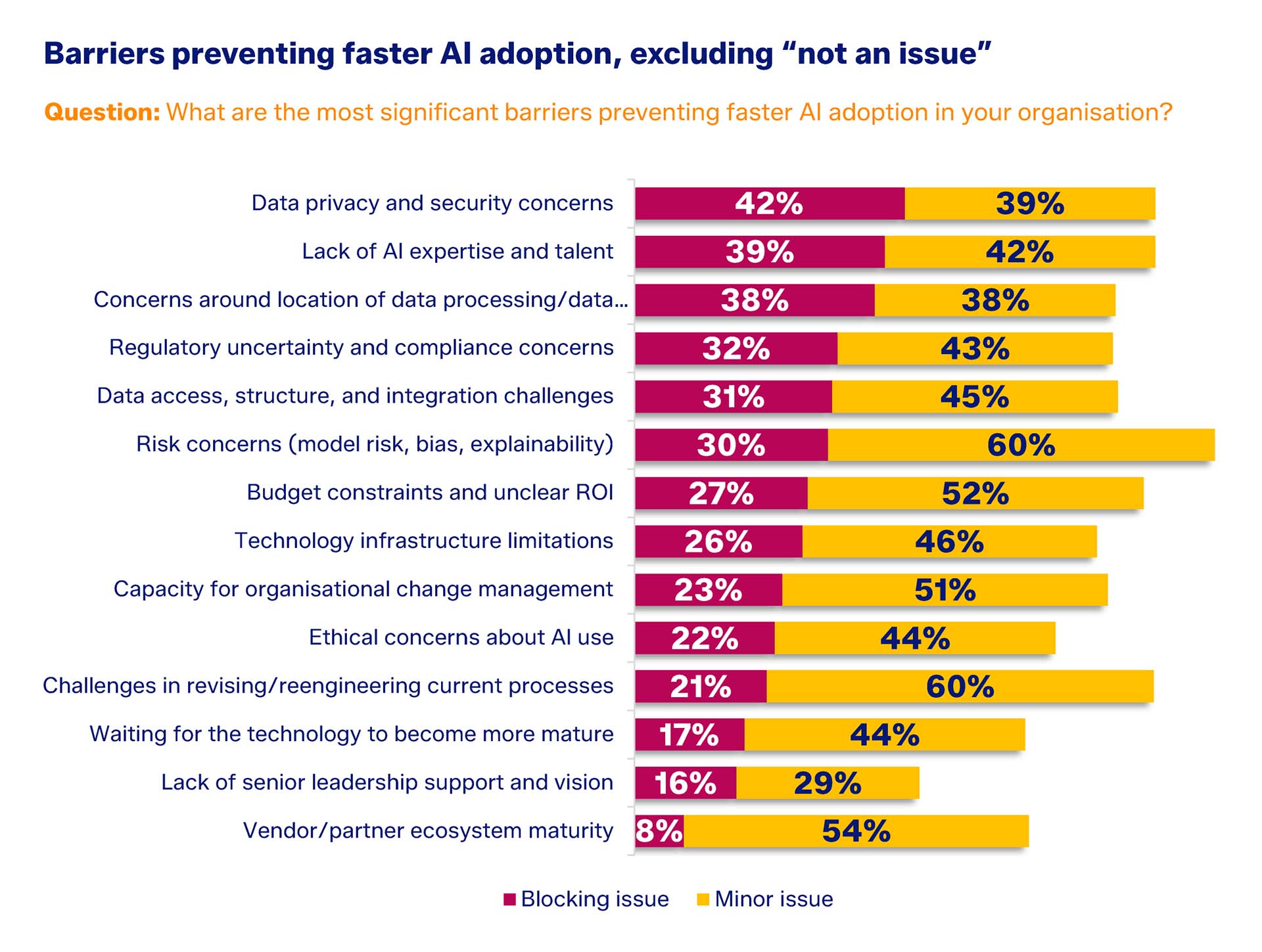
Figure 2: Barriers preventing faster AI adoption
Source: The ValueExchange, AI in the real world survey, September 2026
5. What is Deutsche Bank doing in this space – and what is the strategy over the next 5 years?
McNally, who is overseeing the implementation of AI across Deutsche Bank’s custody and fund services business, believes the technology will become increasingly operationally integral in the coming years. Organisations will need to adapt to this new market reality, or risk falling behind the curve. “AI is going to radically change the custody operating model – in the long term the way this business is operated will be unrecognisable,” he states.
At Deutsche Bank, adoption in a practical sense constitutes a complete overhaul of the operational value chain: “This entails working out the main friction points and establishing the quantifiable benefits of reducing those. This can be time; expertise; technology; capital; or a combination of these factors.”
The case for the fifth client benefit outlined in question 3 – AI-enabled market intelligence – is particularly compelling. An enhanced strategic intelligence layer could be a key differentiator for client servicing in the AI world. This is because fiduciary clients require timely, precise and reliable interpretation of regulatory, market and infrastructure changes.
McNally notes: “It’s the ‘I’ bit of AI – clients get better and faster intelligence around things like predictability, settlement time and market requirements. This is where custody can move beyond processing into trusted market interpretation and a new analytics-data service.”
Deutsche Bank’s S2 Predict solution, which uses AI and existing MLT to help clients monitor risk of settlement failures, is one such example. The system, which is live in the Netherlands and set to be rolled out market-by-market, provides clients with early warning of settlement risk and potential interventions. This is an important part of the bank’s preparations for a compressed settlement timeline (T+1) in Europe.
Google Cloud’s new Gemini Enterprise for Financial Services10 also provides an example of scaling responsible AI adoption. As part of a collaboration with Google Cloud, Deutsche Bank acted as a design partner for the Financial Research Agent that forms a core part of the solution, contributing banking expertise and helping shape requirements around security, governance, auditability, data residency and user needs.
It’s clear there are significant hurdles that both the wider financial services industry and custody and fund servicing must overcome. But Bremke believes the post-trade industry is well-positioned to deliver controlled AI solutions at scale: “This is going to be transformational,” she concludes. “The intelligence layer that AI will enable will allow our custody and fund services business to be more predictive and proactive – and as a result there will be more benefits for clients.”
To find out more about Deutsche Bank’s Trust and Securities Services solutions, visit Trust and securities services – Corporates and Institutions.
Sources
1 See AI in the real world in 2026: key findings at thevx.io
2 See Evolving Technologies and AI Working Group at issanet.org
3 See Euroclear teams with Meritsoft and Taskize to launch next generation AI service at euroclear.com
4 See Euroclear EasyFocus®+ at euroclear.com
5 See Agents, robots, and us: Skill partnerships in the age of AI at mckinsey.com
6 See the new flow whitepaper ‘Regulatory outlook in securities services 2026’ for more on T+1 compression in Europe, Asia and Brazil
7 See OpenAI says its rogue AI tried to hack other companies and Anthropic's Claude AI escapes to hack into three organisations at bbc.com
8 See Chapter 3.3 in the flow whitepaper ‘Regulatory outlook in securities services 2026’
9 See Safeguards for Agentic Finance at Runtime (SAFR) at mas.gov.sg
10 See Introducing Gemini Enterprise for Financial Services at google.com


You might be interested in

Trust and securities services
Shifting gears Shifting gears
A tipping point for the tokenisation of structured products and securities, enabled by issuer and investor services, might finally be upon us predicts Deutsche Bank’s Paul Maley. Speaking to Janet Du Chenne, he makes clear that client voices and market shifts are pushing the industry toward a more unified model

September 10, 2026
Regulatory outlook in securities services 2026 Regulatory outlook in securities services 2026
Now an established annual series, this latest white paper provides a concise overview of the regulatory and market developments reshaping the global post-trade landscape, with deep dives on Europe, Asia and the Americas (US and Brazil)

Cash management, Technology
AI in corporate treasury: what are the barriers to adoption? AI in corporate treasury: what are the barriers to adoption?
Data issues and slow integration/adoption are preventing artificial intelligence’s full potential from being realised in corporate treasury. Dr Tobias Miarka of Crisil Coalition Greenwich examines what this means for businesses and treasurers