
-

flow case study, Cash management
Inside PayPal’s treasury transformation
Moving money is in PayPal’s DNA – which presents specific challenges for the treasury department. PayPal’s Group Treasurer Can Balcioglu tells flow’s Desirée Buchholz how his team modernised treasury infrastructure, applied AI and explored stablecoins
MINUTES min read
How do you pay for your metro ticket? How do you reimburse a friend who settled the restaurant bill? Which payment method do you select when buying a new washing machine online? Consumers complete e-commerce and in-store purchases every day around the world – and in many cases, PayPal is part of the deal.
In 2025, the company had 439 million active users and processed 25.355 billion transactions, representing a total payment volume of US$1.79trn.1 From its origins in 1998, the company has grown through a combination of organic expansion, acquisitions, and its separation from eBay to become the US$33.2bn NASDAQ-listed payments leader with an estimated global market share of approximately 45%.2 PayPal generates its profits primarily through transaction fees and value-added services for consumers and merchants.
However, competition from alternative payment options is intensifying, and the advancement of new fintech service providers creates the risk of disintermediation in mobile and online payments. Now more than ever, PayPal must work hard to maintain its market position, ensuring it meets customer expectations as profitably as possible – a responsibility that is shared by its treasury team.
Treasury challenge: enabling the movement of money
PayPal’s business model – the movement of money at scale – places its Group Treasurer Can Balcioglu in a fundamentally different position from many corporate treasury peers. “As PayPal’s treasury department, we need to provide the infrastructure and support for a large customer cash ecosystem, including trading and pricing activity for over 160 currency pairs to enable cross-border payment flows,” he tells flow. “We are closer to the business, especially in our direct support of the company’s products, compared to most other treasury departments.”
For Balcioglu’s team, managing two distinct ecosystems – approximately US$13.5bn of corporate cash and US$39.5bn of customer funds – requires a treasury infrastructure that must deliver rigorous FX execution, liquidity management, and risk controls in parallel.
“We are closer to the business compared to most other treasury departments”
Balcioglu describes a treasury function that operates well beyond conventional boundaries. “We must ensure liquidity and capital are allocated optimally across a highly regulated, multi-entity structure – enabling timely customer withdrawals while maintaining full regulatory compliance,” he explains. “Our FX team carries a dual mandate: hedging cash flows and balance sheet exposures on one side, and supporting pricing and trading for PayPal's cross-border payments business on the other,” he adds. “That breadth is exactly why building an efficient, intelligent and innovative treasury organisation has always been our central objective.”
But how did PayPal get there? This case study describes three milestone achievements by the treasury department, for which the team was named Best in Class Treasury Solution in The Americas by the Adam Smith Awards, as well as Treasury Team of the Year 2026 by Treasury Management International (TMI).
1. Getting the basics right: modernising treasury infrastructure
Like many companies that scaled rapidly across borders, PayPal's treasury systems and processes evolved organically – growing in complexity alongside the business itself. Nobody knows this better than Balcioglu, who joined the company in 2010 as Senior Finance Manager when PayPal was still part of eBay. Following a move to treasury to oversee the Corporate Finance function, and later a stint as Head of International Treasury based in Singapore, in 2022 he was promoted to Group Treasurer and in July 2024 he moved back to the company’s headquarters in San Jose, California.
Upon his promotion to the treasurer position, Balcioglu initiated a comprehensive review of the treasury infrastructure. The findings were stark: core processes remained heavily dependent on Excel spreadsheets, underpinned by largely manual controls. “The review was revealing: We were only utilising between 10 and 20% of our treasury management system’s (TMS) available functionality. The platform's potential was largely untapped,” he recalls. “Compounding this, successive investments in specialist point solutions – each justified on its own merits – had collectively introduced significant reconciliation complexity across the system landscape.”
Balcioglu, with his long tenure at PayPal, brought deep institutional knowledge of PayPal’s financial architecture, regulatory obligations and strategic priorities. To complement this, the company hired two treasury technology specialists: Mohammad Mirza from GE and Deepa Palamuttam from Intel. “Their expertise allowed us to rationalise our system footprint significantly – and then build automation on a much stronger foundation,” Balcioglu says. With Mirza and Palamuttam on board, the treasury team set out on a multi-year transformation initiative.
Achievements of the project
- Cash positioning was standardised across regions on TMS, retiring 90 spreadsheets and saving approximately 1,700 hours annually. Building on that foundation, integration of payments data into forecasting drove cash positioning accuracy to >99%
- Global automated cash visibility rose from 78% to near 100% across approximately 1,000 accounts
- FX derivatives – previously managed in a separate system – were migrated into the TMS through a disciplined proof-of-concept approach, with no trading pause
- Bank account management was re-implemented as a true system of record with automated reconciliation
- Wire processing reached 80% straight-through processing across roughly 3,000 wires per month, eliminating redundant validations
2. Using AI to increase efficiency and improve decision-making
With the groundwork complete, the roadmap became clear for additional enhancements. Modernising the infrastructure, migrating treasury data to the cloud, and automating core processes created the conditions necessary to deploy artificial intelligence (AI) at scale.
“I am a heavy user of AI – I believe it will define how treasury functions in the future,” says Balcioglu. “We at PayPal are fortunate because the company has made investments in a number of AI tools with significant internal tech support,” he adds. His message to his team is clear: AI is not a threat but a productivity multiplier, and the hands-on exposure they are gaining now represents a genuine professional advantage.
PayPal’s Group Treasurer assigns AI usage within treasury in two categories: first, the self-service model where employees use AI assistants to enhance their productivity for daily tasks, e.g. by reducing document review times. “This started growing organically and we offer internal workshops where people share best practices and learnings on how they are using AI effectively.”
The second category is more advanced: agentic AI that not only interfaces with internal Treasury systems and external information sources, but also instructs them, initiating actions and tasks. Balcioglu points to three examples:
- Treasury conversational agent (already operational): an AI layer that allows the team to interrogate treasury data directly in natural language, and build dashboards on demand – e.g. exposure in a certain jurisdiction over a certain timeframe or the risk profile of the investment portfolio.
- Counterparty analysis agent (nearly completed). The AI tool will allow the team to assess counterparty creditworthiness, monitor risk profiles, and reveal concentration exposures.
- Bank account opening and closing agent (in design phase). Jointly built by the treasury cash management and treasury technology teams, this agent will orchestrate the full account lifecycle across internal ticketing and messaging systems, delivering real-time process visibility to the requester from initiation to completion.
Many of the AI initiatives currently in use at PayPal Treasury today emerged not from the top down, but from within the team itself. Treasury members were invited to identify their most cumbersome processes and articulate where AI could provide the greatest value (see Figure 1 below).
This call to action helped encourage a culture shift to “AI first,” confirms PayPal’s Kammy Tsang, Global Head of Cash Management: “That’s what we are most proud of. The fact that we are co-creators elevated morale, strengthened ownership, and gave colleagues a direct hand in shaping the future of their function.”
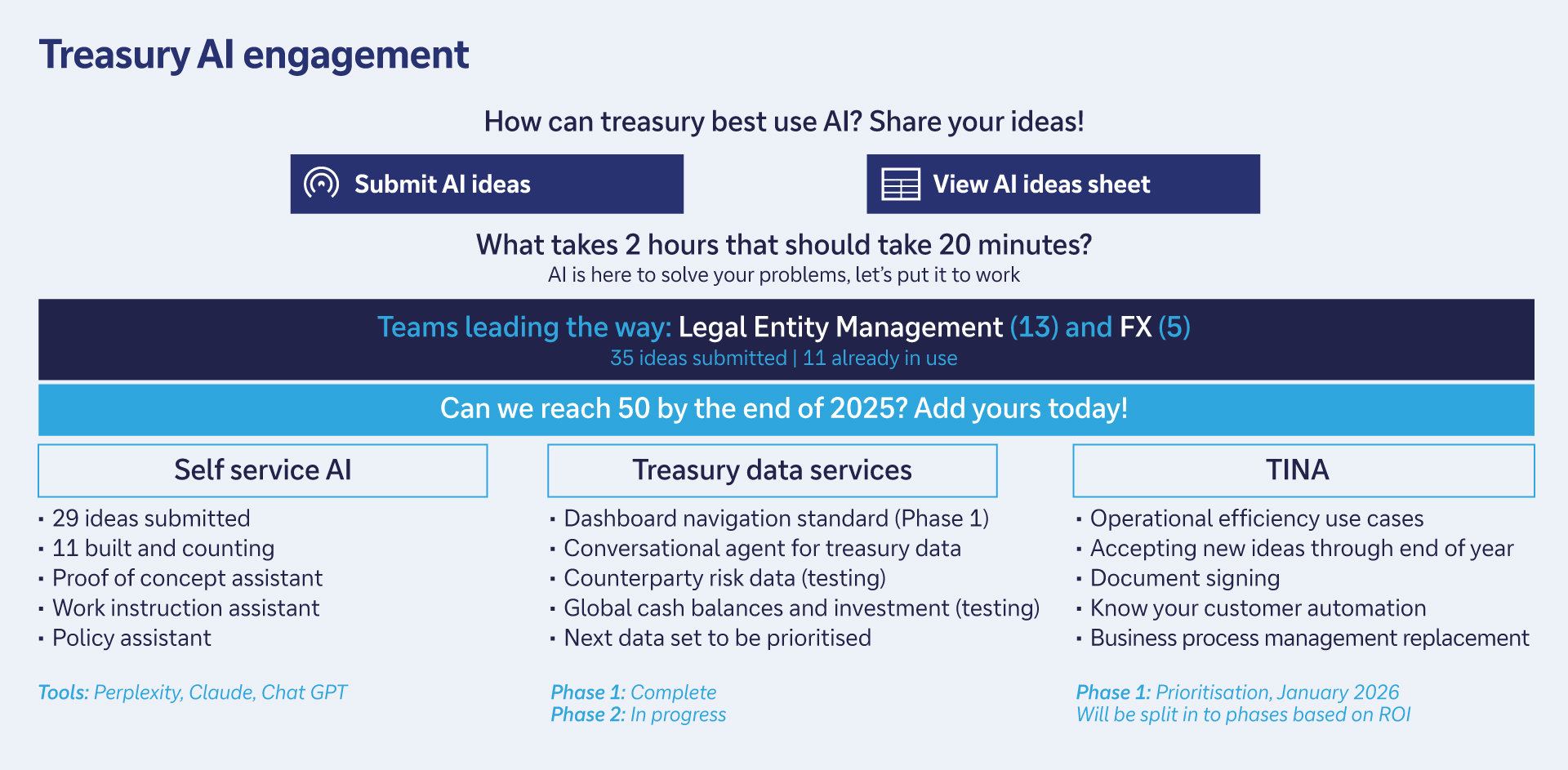
Figure 1: PayPal’s 2025 call to engage in treasury AI
Source: PayPal
3. Settling intercompany transactions with stablecoins
Alongside its work on AI, PayPal’s treasury team is also assessing the role of stablecoins as a new payment rail. In August 2023, the company launched PayPal USD (PYUSD) a US dollar-denominated stablecoin3 that’s available for consumers, merchants and developers. According to PayPal, consumers can use PYUSD to pay purchases, send person-to-person payments and transfer PYUSD between PayPal and compatible external wallets.4
During 2025, the company’s treasury team executed one of PayPal’s first intercompany settlement pilots using its proprietary stablecoin – spanning three continents and surpassing US$1bn in aggregate volume. A dividend repatriation from Singapore to the US, that would typically take several days, cleared in hours. The significance becomes clear against the backdrop of conventional banking rails, which remain subject to settlement delays, limited visibility, and inconsistent cross-border timing – often demanding manual coordination across multiple time zones.
“Stablecoins could complement existing payment rails”
“This pilot demonstrated that stablecoins could complement existing payment rails in the future as they allow for a faster, more transparent and cost-efficient alternative to traditional banking rails,” Balcioglu says. However, he also stresses that stablecoins will not fully replace fiat currency flows but rather be an additional rail. “The pilot allowed us to learn a lot about the accounting, legal and tax implications of stablecoin settlement.”
While he acknowledges that the regulatory frameworks are being established, via the GENIUS Act in the US and Markets in Crypto-Assets (MiCA) regulation in the EU, Balcioglu also believes that a wider adoption in corporate treasury will take time. “Most TMS and ERP systems in use today are not designed to natively support stablecoins or digital assets. And then there is the familiarity and trust factor: while PayPal has built institutional knowledge for PYUSD, many treasurers don’t have the benefit of being that close to a stablecoin, and they are in a wait and see mode.”
Expanding the partnership with Deutsche Bank
This is why PayPal also looks to optimise existing banking rails: In January 2026, Deutsche Bank and PayPal announced the expansion of their partnership into a global mandate that strengthens PayPal’s payment and settlement capabilities. Under the agreement, Deutsche Bank now scales merchant settlements and payouts and has begun providing withdrawals and collection services in the US, with additional support extending across Europe and APAC.5
The broader partnership also encompasses new infrastructure critical to PayPal’s growth. Namely, Deutsche Bank diversifies Automated Clearing House channels across both PayPal and Venmo, which allows PayPal to scale commerce solutions globally while improving settlement optionality and market reach.
“We have worked with Deutsche Bank for almost 20 years, and the quality of service was always excellent,” says Balcioglu. “Payments are a tough business. There will always be issues and it’s great that we have a trusted, strategic partner in Deutsche Bank that solves these issues for us.”
Lead image: © PayPalSources
1 PayPal annual report 2025
2 See PayPal Statistics, Facts & Figures for 2026 at chargeflow.io
3 For more information on stablecoins and other forms of digital money, please read our whitepaper: Digital Money – a perspective on stablecoins, tokenised deposits, and CBDCs
4 See Press Release: PayPal Launches U.S. Dollar Stablecoin - Aug 7, 2023 at newsroom.paypal-corp.com
5 See Deutsche Bank expands support for PayPal to strengthen global payment capabilities at db.com


You might be interested in

Cash management, flow case studies, Technology {icon-book}
Tomorrow’s treasury: what’s the role of real-time? Tomorrow’s treasury: what’s the role of real-time?
The vision of a “real-time treasury” has been around for several years now. But how do instant payments and access to real-time information really change the way treasury is managed? flow’s Desirée Buchholz hosts a debate on the role of real-time in the future of treasury
flow case studies, Cash management
Fewer accounts, faster payments: ABB’s path to a more efficient treasury Fewer accounts, faster payments: ABB’s path to a more efficient treasury
Supporting ABB’s purpose of enabling sustainability and resource efficiency also requires internal functions to operate with greater efficiency. ABB’s Corporate Treasury team, for instance, is using virtual bank accounts to run a leaner and more efficient operation. flow’s Will Monroe finds out more

Sustainable finance, Technology {icon-book}
How AI is reshaping the energy transition How AI is reshaping the energy transition
As artificial intelligence (AI) drives innovation across sectors, it’s not only fuelling technological progress, but also significantly increasing electricity demand. Deutsche Bank’s Lavinia Bauerochse describes how this development is transforming the global energy transition – and why investments in grid expansion and transition finance are taking centre stage