
-
Cash Management, Technology
The journey towards new rails and agentic payments
Tokenised money and artificial intelligence (AI) are beginning to reshape cross-border payments. What is already possible today, where is the industry heading, and what risks does it entail? flow provides an assessment from Sibos 2026
MINUTES min read
“The payments industry is changing at an unprecedented pace,” was the recurring message at Sibos 2026, as speakers pointed to developments over the past 12 months.
To give a few examples: Swift’s blockchain ledger, announced at Sibos 2025 in Frankfurt, is now ready for initial use, enabling 17 early-adopter financial institutions to support 24/7 cross-border payments using tokenised deposits.1 Project Agorá completed its first real-value test transactions in July 2026, marking the next phase of the public-private initiative’s exploration of how tokenisation could enhance wholesale cross-border payments.2 Two months later, the European Central Bank (ECB) launched Pontes, a solution that enables transactions on distributed ledger technology (DLT) to be settled in central bank money.3
Yet the emergence of new technologies does not necessarily mean replacing existing payment infrastructure. As Rachel Whelan, APAC & MEA Head of Corporate Cash Management and Global Head of Payments & TFX Product Management at Deutsche Bank, observed at Sibos: “Clients don’t care which rail is used; what matters is the outcome.” Banks must therefore decide where new technologies add value, where existing infrastructure works just as well, and where combining the two delivers the best outcome.
Against this backdrop, our first Sibos wrap-up article, ‘Building on today’s payment foundations’, explores how existing payment architecture is being enhanced to meet changing client needs. This second article turns to the next frontier: how tokenised money and AI could transform payments and correspondent banking.
Digital money and new rails: infrastructure versus currency layer
As set out in the May 2026 flow white paper on Digital money, there are three main types of digital money that are already seeing real-world use cases:
- Stablecoins, which are digital representations of fiat currency issued on blockchain networks and typically backed by bank deposits, cash equivalents or high-quality liquid assets to maintain a stable value.
- Tokenised deposits, which extend the existing banking model into programmable environments, preserving the role of commercial bank money while enabling new functionality.
- Retail and wholesale central bank digital currencies (CBDCs), which support tokenised financial markets and help ensure national payment sovereignty.
The roles of these forms of money and their underlying infrastructure were hotly debated during the panel ‘The sovereign money question: CBDCs, stablecoins, and the fight for the settlement layer’.
Tony McLaughlin, CEO and founder of Ubyx, an acceptance network for tokenised money, argued that public blockchains are already venues where people transact. If central banks and commercial banks confine tokenised money to private, permissioned ledgers – which is what is currently happening – users on public chains are left with unregulated alternatives, he stated. In his opinion, “This is a market failure.”
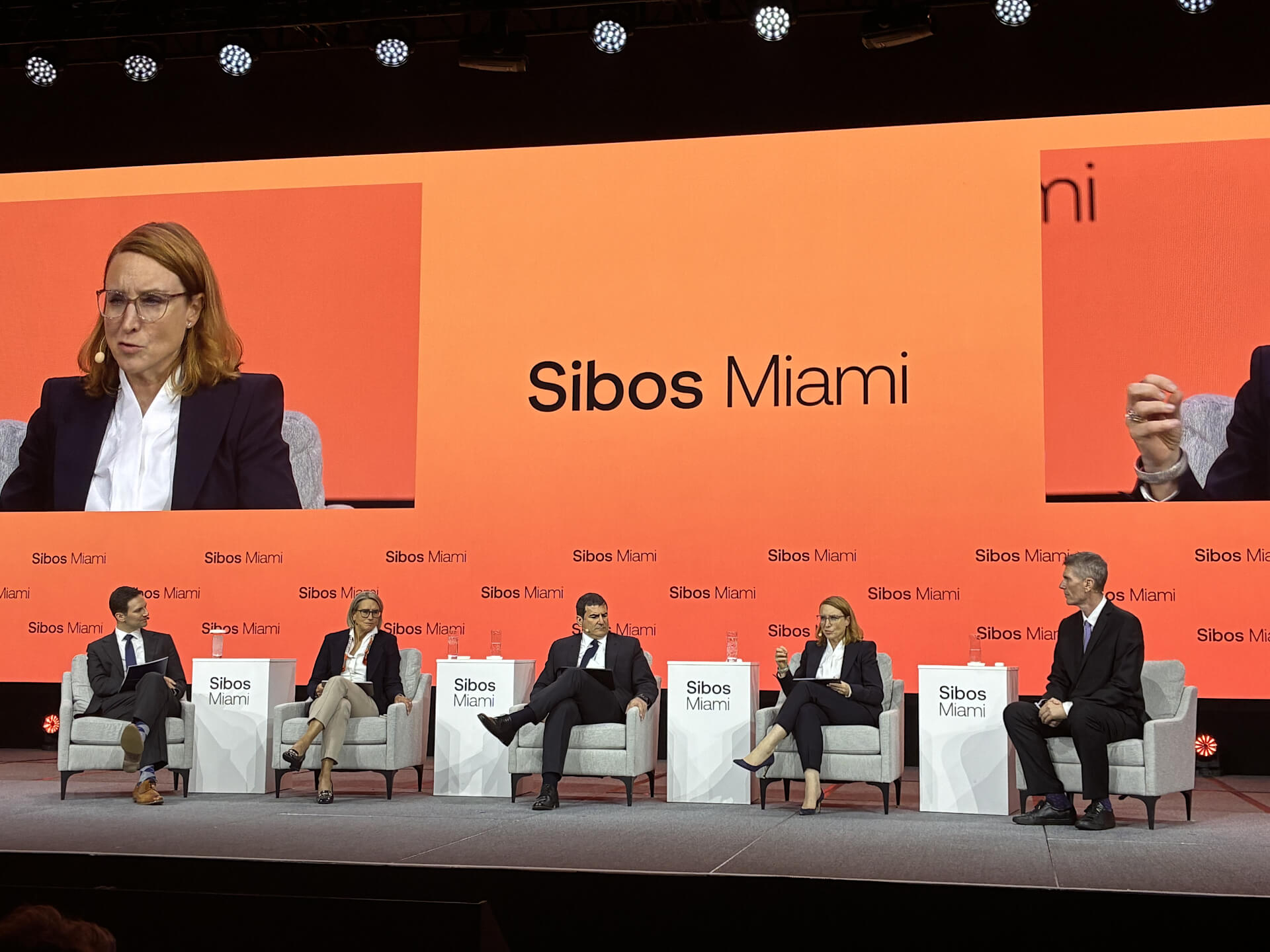
John Lipsky (Atlantic Council), Andréa Maechler (BIS), Alberto Naudon (Central Bank of Chile), Alexandra Hachmeister (Deutsche Bundesbank), Tony McLaughlin (Ubyx)
Andréa Maechler, Deputy General Manager at the Bank for International Settlements (BIS), emphasised that the debate is not simply about technology or choosing a single settlement rail: “As tokenisation develops, the challenge is to preserve the trust, singleness and settlement finality that underpin the monetary system while enabling different forms of money and infrastructure to coexist. Interoperability between different networks and trust architectures is therefore not only a technical challenge, but also a governance one.”
Alexandra Hachmeister, Director General, Digital Euro at Deutsche Bundesbank, separated the debate into two layers. The first is the currency layer: who issues the monetary instrument, what claim it represents, its denomination and whether users trust it. “For central banks, the currency layer impacts monetary sovereignty as well as the ability to manage price stability.”
The second is the infrastructure layer: the public or private blockchains, conventional payment systems or wallets through which money moves. This layer determines accessibility, interoperability, programmability and settlement efficiency. “For us, this is one of the unresolved questions: would we be comfortable issuing wholesale CBDC on a platform that we cannot control?”, she said.
With the launch of Pontes in September, the Eurosystem has made a trusted settlement asset available on its private permissioned DLT. The aim is not to generate large transaction volumes immediately, Hachmeister explained, but to observe how the market uses it, which use cases emerge, and where the model needs to evolve.
Wholesale CBDCs and tokenised deposits remain largely experimental: as of May 2026, the Atlantic Council counted 29 wholesale CBDCs in pilot stage and 10 under development.4 Stablecoins, by contrast, are already operating at scale. Market capitalisation increased from around US$50bn in 2021 to over US$300bn by October 2026 – with Tether accounting for 60% of market share.5
Although crypto trading still accounts for the vast majority of stablecoin transactions, stablecoin payment volumes rose from US$151bn in 2022 to US$375bn by October 2026.6 According to Deutsche Bank Research, strongest adoption is seen in remittances, business-to-business (B2B) payments and dollar access in countries with unstable currencies or weak banking systems (see Figures 1 and 2).7
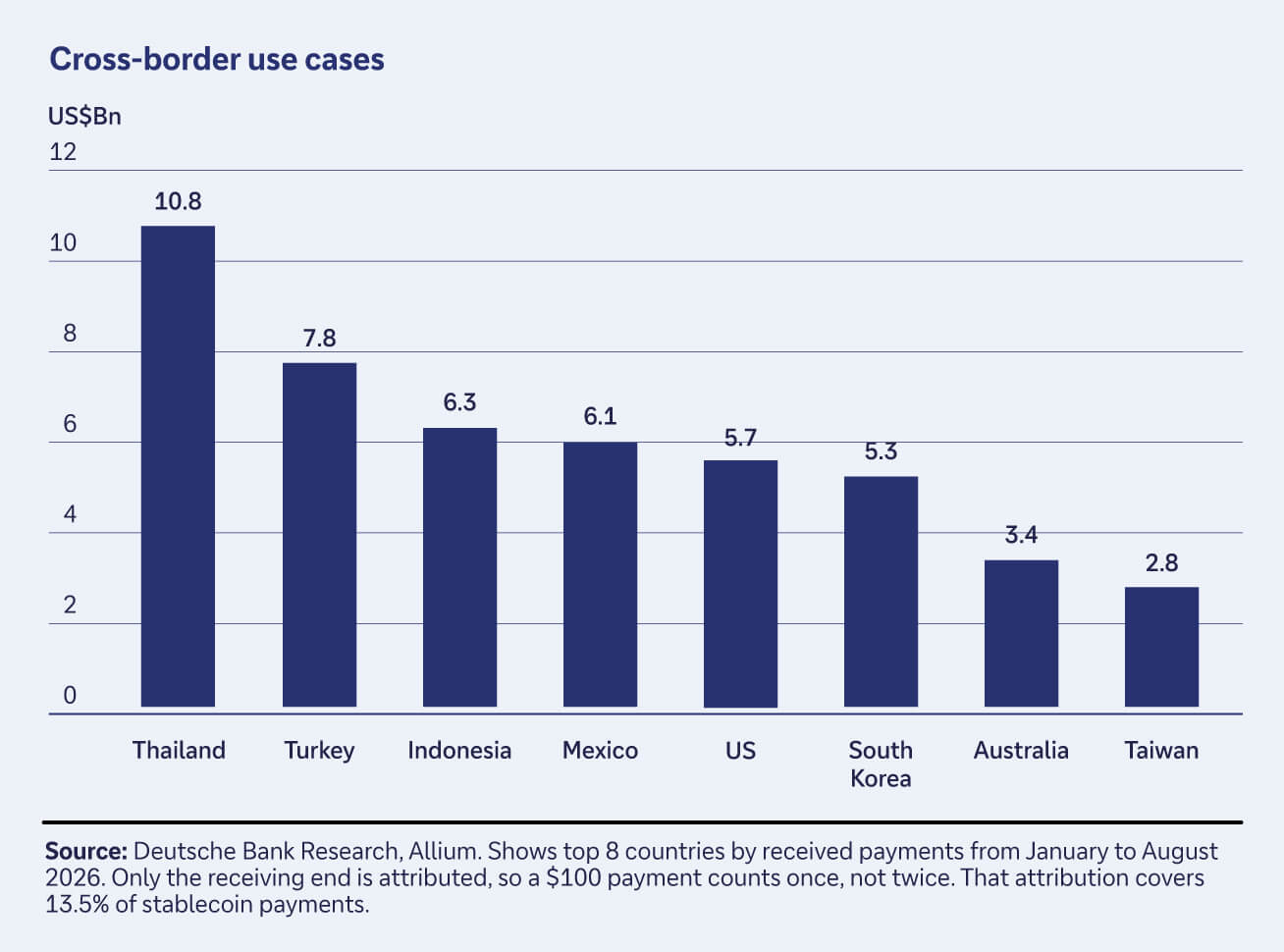
Figure 1: Stablecoins payment use case is steadily growing
Source: Deutsche Bank Research, Allium
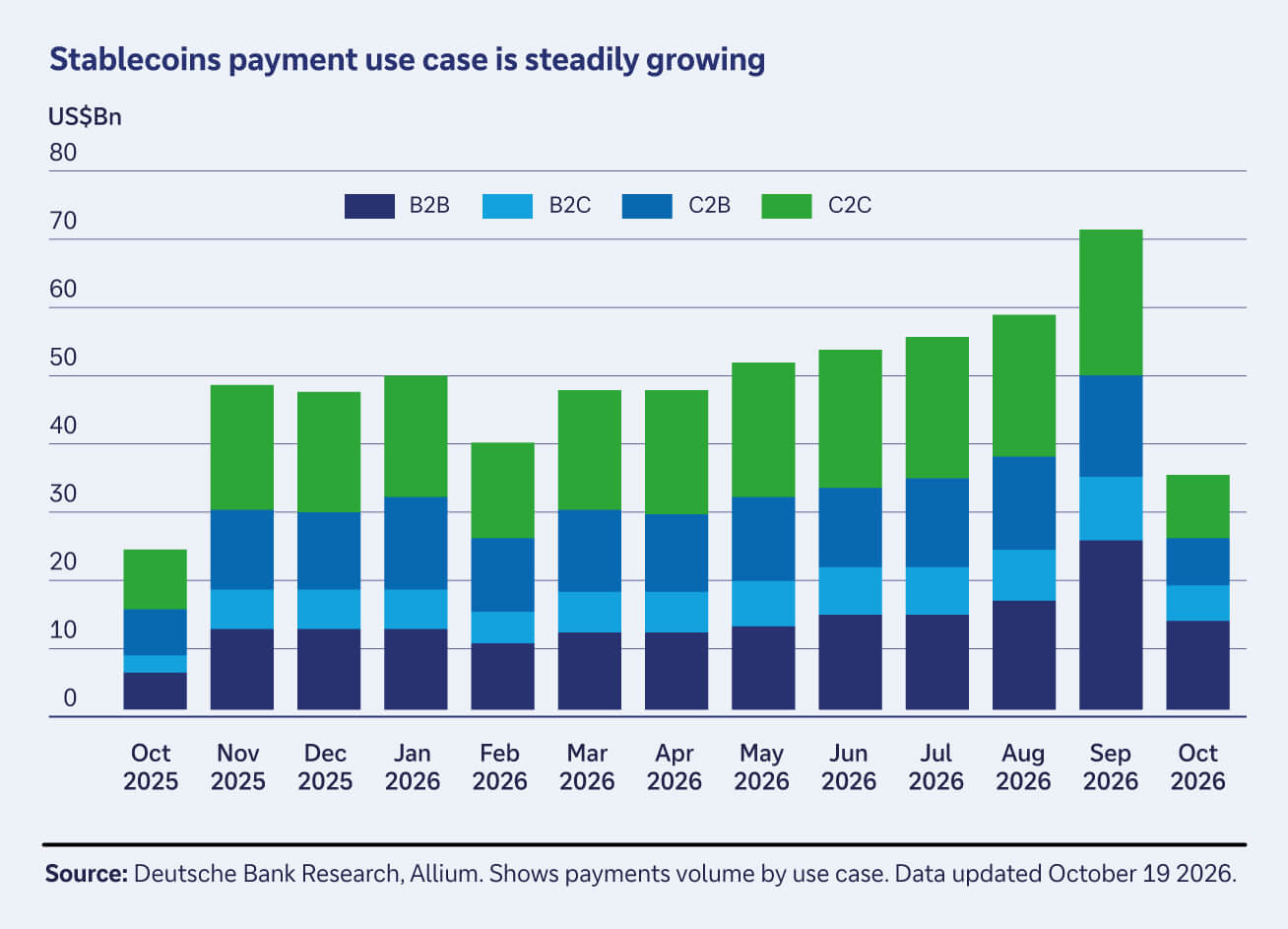
Figure 2: Cross-border use cases
Source: Deutsche Bank Research, Allium
Looking at the use cases in payments, Alberto Naudon, Deputy Governor of the Central Bank of Chile, stated that stablecoins “can make it easier to move value across borders or access dollars, particularly in countries with weak monetary institutions”. In his view, much of their current appeal reflects regulatory arbitrage and demand for offshore dollars, rather than the superiority of blockchain itself.
Maechler highlighted the macro-financial and policy challenges associated with rapid stablecoin adoption. “In particular, foreign-currency stablecoins can accelerate currency substitution, weaken monetary policy and capital-flow management, and result in domestic savings moving abroad to back foreign-currency stablecoins.” She did, however, agree that the future would be a “multi-money, multi-rail, multi-currency world” run on different architectures that needed to be compatible.
Published just ahead of Sibos, the flow white paper ‘Cross-border payments in 2040: five hypotheses for a multi-rail future’ explores this emerging landscape in greater detail.
Stablecoins and AI – a powerful combination?
Agentic AI could significantly expand the role of stablecoins in cross-border payments. In his ‘View from the Top’ interview, Jeremy Allaire, Co-Founder, Chairman and CEO of Circle, argued that more mature blockchain infrastructure and clearer regulation – including the US GENIUS Act and Europe’s MiCA – are bringing stablecoins into the financial mainstream.
This shift is already visible: on 1 September, a consortium of 21 international banks, including Deutsche Bank, announced plans to launch a stablecoin solution in the first half of 2027. It is intended to provide trusted digital money for uses including cross-border payments and digital asset settlement.8
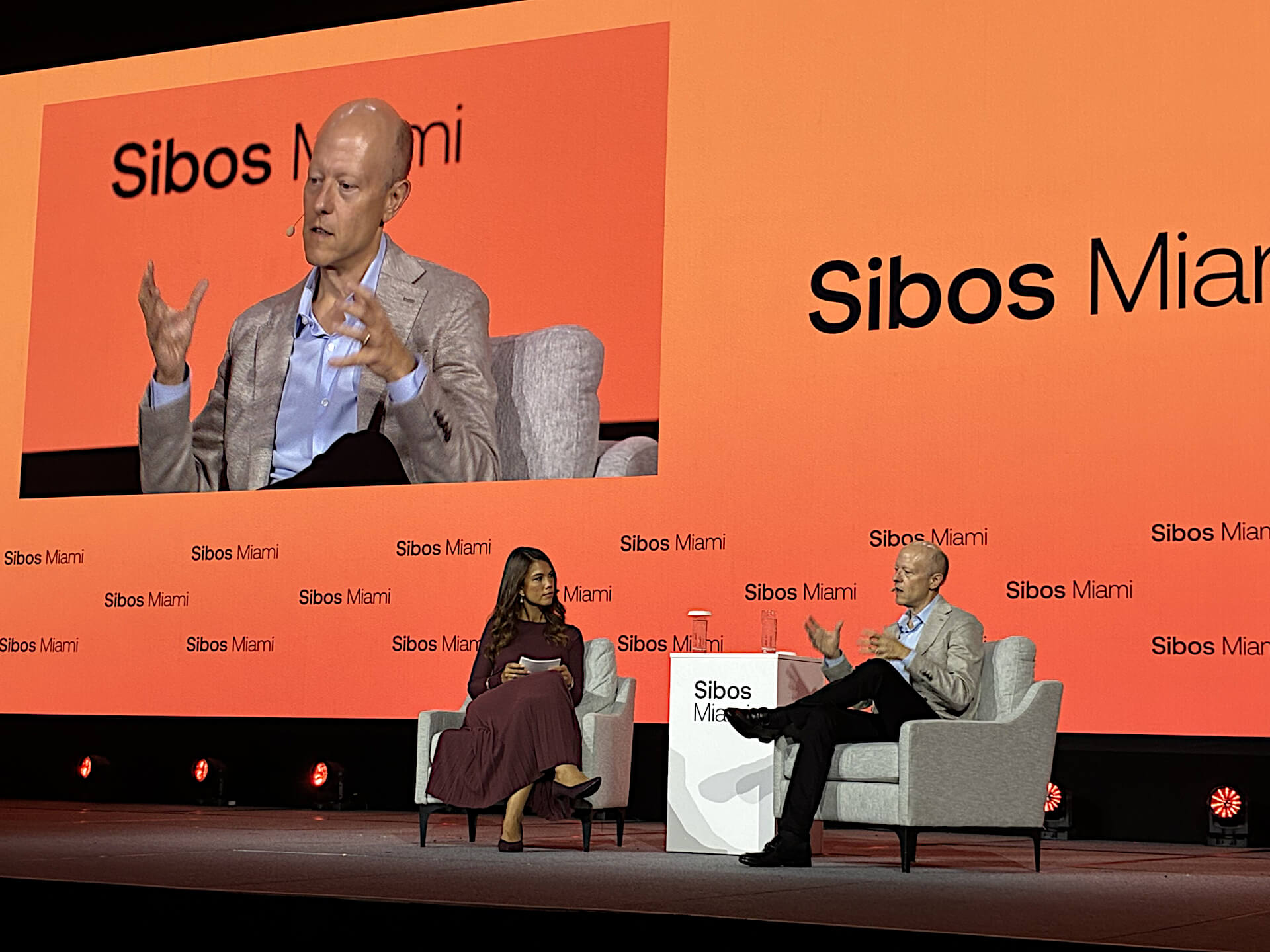
Circle CEO Jeremy Allaire in conversation with Léa Salamon of Fintech Finance
AI agents could make stablecoins essential to fast, low-cost machine-to-machine economic activity, Allaire argued. “Stablecoins are a natural medium of exchange for AI agents because they can settle globally, in fractions of a second and at very low cost,” he said. “Machines have chosen their money and they’re increasingly using it.” However, he acknowledged that AI-agent payment activity remains limited, even if adoption curves appear exponential.
Allaire also stressed that trust, verifiability and robust safeguards will be preconditions before meaningful financial decisions can be delegated to AI. “Beyond foundation-model safety, organisations will need proof that AI agents used data appropriately and performed the work they claim,” he said, positioning cryptographic records and proofs as prerequisites for delegating consequential financial activity to AI.
Agentic payments – from consumer to B2B?
By 2030, Accenture estimates that more than 30% of online commerce could run through AI agents, representing close to US$3trn in transactions.9 Widespread delegation will ultimately depend on consumer trust and the readiness of the underlying infrastructure. Research by Visa shows that 38% of US consumers are comfortable with AI completing a purchase for them. Meanwhile, 60% would not allow AI to spend any amount without approval.10
B2B adoption is more complex, as the session ‘Agentic payments: defining the blueprint for autonomous payments at scale’ highlighted. On stage, Swift’s Vicky Wang shared a B2B blueprint for an agentic cross-border payment to demonstrate what is already possible with existing payment infrastructure – and what’s still futuristic.
The transaction relates to a payment of an EU-based company to its Indian supplier. The original payment has already settled, but the supplier later identified a shortfall caused by an additional shipping charge. The supplier’s AI agent reconciles the payment against the updated invoice and identifies the missing shipping cost. “Agents can already process invoices, compare payment and invoice data, identify missing information and support exception handling,” she said.
In a second step, the supplier’s agent approaches the customer’s agent directly to request the outstanding amount. Finally, before acting, the payer’s agent verifies the identity of the supplier’s agent and checks that the payment request is legitimate.
“These two steps are still futuristic because direct agent-to-agent communication requires an industry-wide trust framework covering agent identity, authentication, standards and interoperability,” she said, suggesting that Swift could potentially provide this common trust layer.
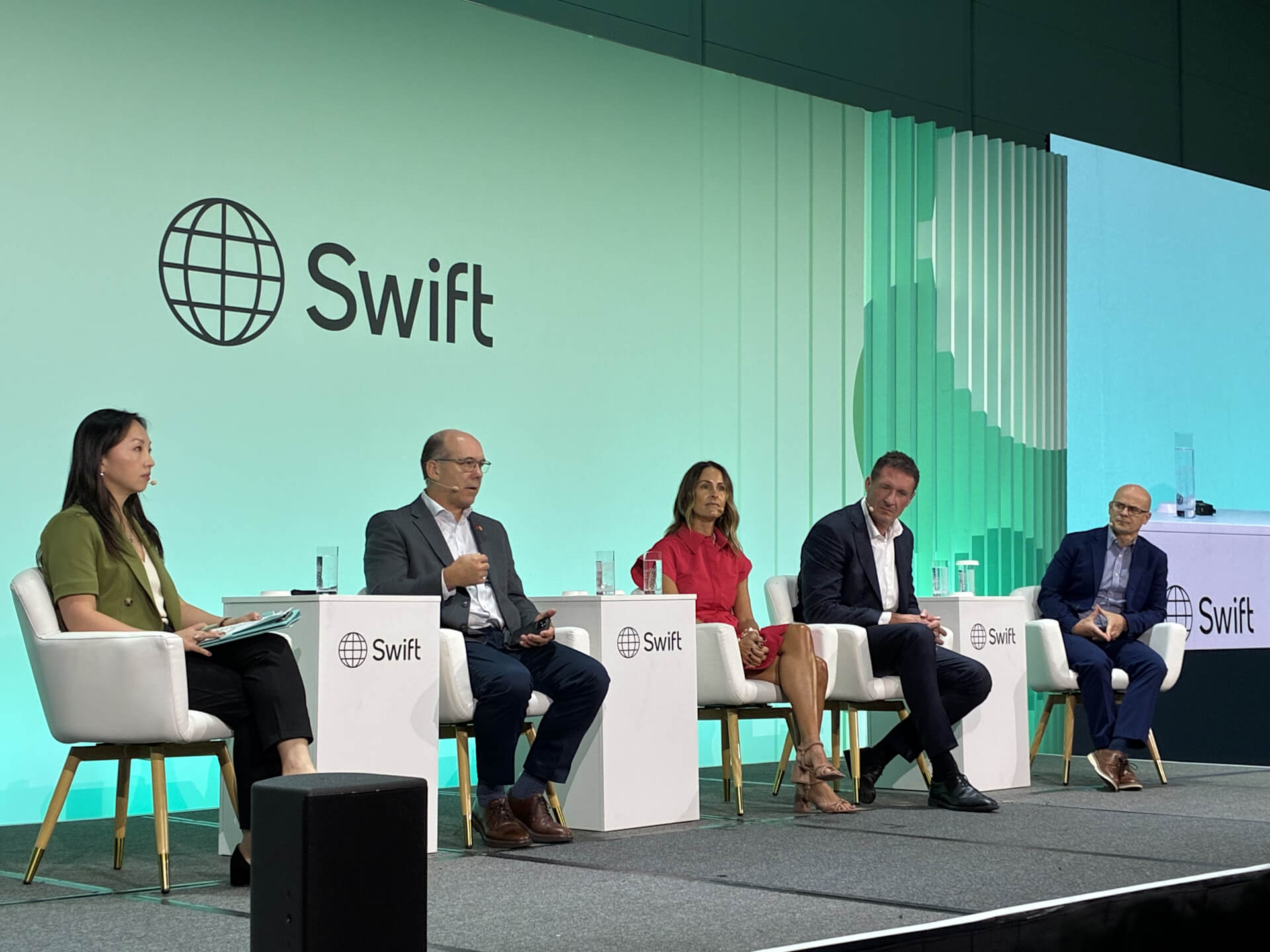
Vicky Wang (Swift), Johan Gerber (Mastercard), Stephany Kirkpatrick (EY), Christophe Tummers (Société Générale), Greg Williamson (Nasdaq)
Beyond verifying an agent’s identity, businesses must ensure it operates within their own systems and controls. “Corporate agents must integrate with ERP, accounts payable and treasury systems, as well as established payment schedules and working-capital policies,” said Christophe Tummers, Group Chief Data Officer at Société Générale. “The agent must also prove that it acted within the company’s authority matrix, approval thresholds and segregation-of-duties rules.”
Stephany Kirkpatrick, Advisor in Residence at EY, agreed that businesses need a clear paper trail covering intent, authority, approvals and every decision point. “At EY, we see strong signals that agentic payments will become part of global trade finance for banks and large corporates,” she said, adding that she herself is an early user of agentic commerce.
Looking ahead, however, she sees human oversight as a potential risk: “I’m concerned that we will overindex ‘human in the loop’. We cannot garage a small number of humans with a set of reviews that are hard to trace as they will inevitably get tired of that and click approve.”
New risks emerging
The question of how AI-driven automation will create new threats for the financial system was discussed in the panel ‘Trust under pressure: resilience in a world where compromise must be assumed and prepared for’.
The panellists suggested that the next financial crisis may be triggered not by inadequate capital or liquidity, but by a large-scale operational incident such as a major cyberattack, the failure of a critical technology provider or an outage of a payment, clearing or settlement infrastructure.
With this in mind, in July 2026, the UK extended regulatory oversight beyond traditional financial firms through its Critical Third Parties regime. This allows the Bank of England, the Prudential Regulation Authority and the Financial Conduct Authority to supervise designated technology providers whose disruption or failure could threaten financial stability.11
How banks are using AI
Alongside these operational risks, AI also raises a commercial question for banks: how will it reshape the economics of payments?
Global payments remain banking’s largest revenue pool, generating about US$2.6trn in revenue and US$2.1quintillion in annual value flows, according to McKinsey’s 2026 Global Payments Report. Under the consultancy’s baseline adoption scenario, agentic AI could put roughly US$75bn in global payments revenue at risk by 2030. However, the report estimates that banks’ productivity gains in payments could generate up to US$110bn in annual value.12
In the panel ‘No more practice runs: scaling AI into the core of banking’ Joanne Hannaford, Chief Information Officer and Chief Product Officer, Corporate Bank at Deutsche Bank, explained how Deutsche Bank has moved rapidly from experimenting with AI to deploying it at scale.
“The pace of innovation with AI is staggering,” she said. Within a year, the bank has put around 100 core AI agents into production or development and is now moving from individual large language model applications to Ada, its shared platform for AI agents. Ada enables teams to discover and reuse capabilities, access approved models and apply common standards, while giving the bank visibility of risk, cost and performance.
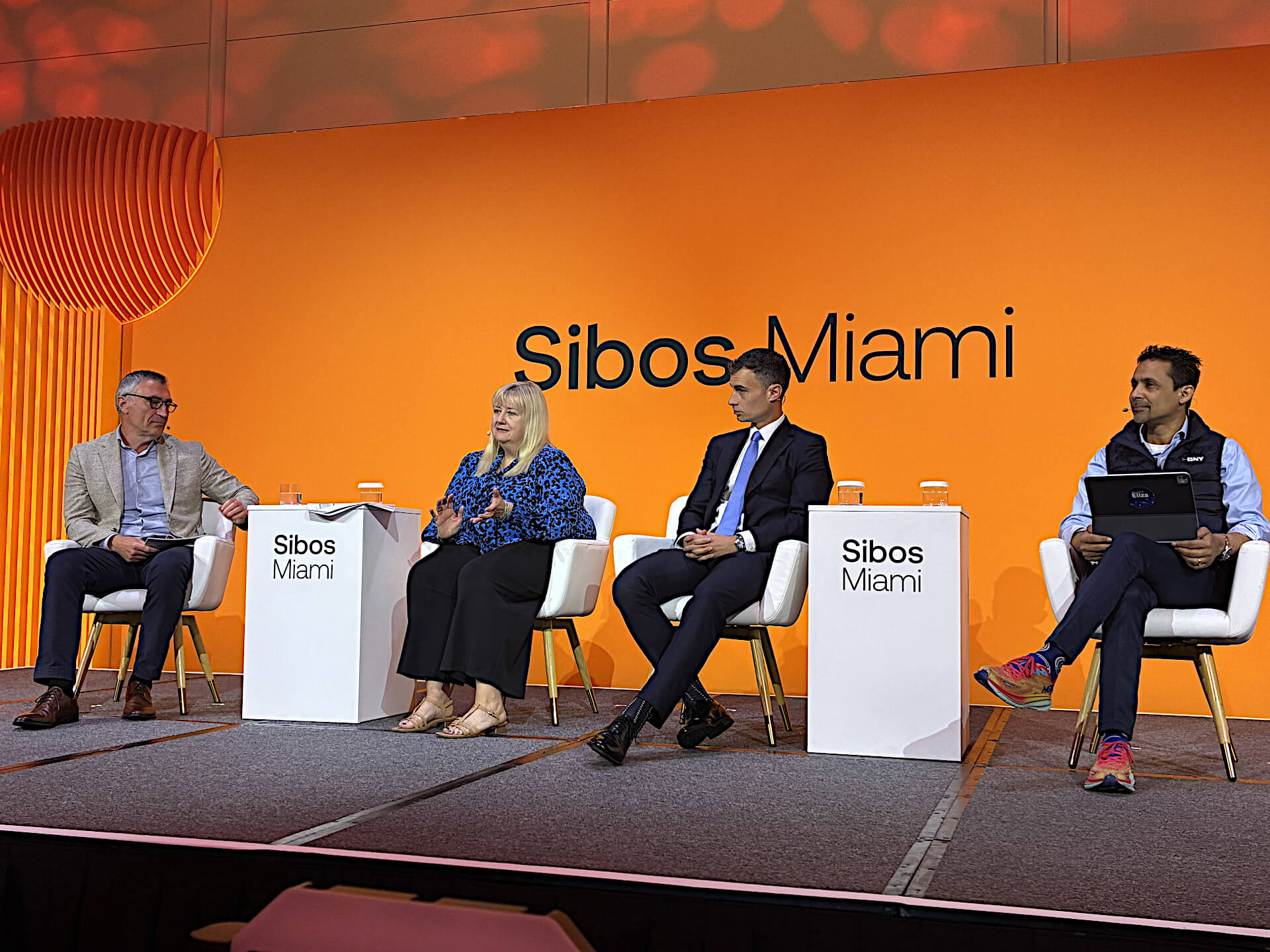
Tara Brady (Google), Joanne Hannaford (Deutsche Bank), Thomas Elliott (HSBC), Sarthak Pattanaik (BNY)
Hannaford described Deutsche Bank’s partnership with Google as an important foundation for scaling AI. “Google’s platform and Gemini Enterprise give us governed access to a range of large language models without having to integrate each one separately,” she said. “This allows us to select the most appropriate approved model for each use case based on performance, risk and cost, while adapting as the technology evolves.”
Hannaford also highlighted Deutsche Bank’s role as a design partner for Google Cloud’s Financial Research Agent, a core component of Gemini Enterprise for Financial Services. The bank contributed its financial-services expertise to help shape a secure, governed solution. The first rollout of the bank’s internal implementation is planned for the Corporate Bank’s German MidCorp Coverage team, where it will help bankers prepare client briefings, identify client needs and potential business opportunities earlier, and focus on informed client conversations and expert judgement.
Hannaford stressed that AI investment is increasingly embedded in annual planning and tied to clearly defined business outcomes. Use cases are prioritised according to the value they can deliver and their ability to scale safely, with benefits measured through indicators such as cycle time, straight-through-processing rates, fewer manual touchpoints, capacity created and revenue potential.
Future outlook
As the Sibos discussions showed, the AI challenge for banks is twofold: turn AI’s potential into measurable client value, while ensuring that controls can keep pace with the technology.
Looking at the future role of correspondent banks, Tsvetanka Nankova, Global Head of Sales Institutional Cash & Trade Finance at Deutsche Bank, stressed the importance of a trusted connector and adviser: “Our role is to combine global reach, local clearing access, liquidity, FX, compliance expertise and resilience, while helping client banks navigate the transition to real time.”
Her central call to action was to disrupt existing models proactively: “Cannibalise your own business, or others will do it,” she concluded.
Deutsche Bank Research report referenced:
- STABLECOINS: What next for crypto assets? By Marion Laboure and Camilla Siazon (20 October 2026)
Header image: Courtesy of Swift/Sibos via Flickr
Sources
1 See Swift’s blockchain ledger ready for use as 17 banks set to pioneer tokenised cross-border payments on trusted global infrastructure at swift.com
2 See Deutsche Bank completes live Project Agorá real-value test transaction at corporates.db.com
3 See “Europe has a window of opportunity – but it will not be open forever” at flow.db.com
4 See Central Bank Digital Currency Tracker at atlanticcouncil.org
5 See Stablecoin Market Cap Chart, Supply & Peg Data at defillama.com
6 See Visa Onchain Analytics Dashboard at visaonchainanalytics.com
7 See STABLECOINS: What next for crypto assets? at dbresearch.com
8 See Group of leading international financial institutions to establish stablecoin enterprise at prnewswire.com
9 See Agentic commerce rewrites payment choice at accenture.com
10 See Visa defines the next era of commerce: When AI becomes the customer at visa.com
11 See UK financial regulators to begin overseeing Critical Third Parties announced by HM Treasury at bankofengland.co.uk
12 See The 2026 Global Payments Report at mckinsey.com


You might be interested in

Cash Management, Technology
Europe has a window of opportunity – but it will not be open forever Europe has a window of opportunity – but it will not be open forever
From tokenised settlement assets to cross-border instant payments, the ECB’s Thomas Vlassopoulos outlines how the Eurosystem’s payments strategy acts as a catalyst for change – and why adoption now needs to come from banks and corporates
Cash management
Building on today’s payment foundations Building on today’s payment foundations
Tokenised money and artificial intelligence (AI) may be reshaping the payment industry, but progress still depends on the underlying infrastructure, standards and data. What comes next for cross-border payments after Sibos 2026?
Trust and securities services, Macro and markets
Europe’s T+1: towards 90% global alignment Europe’s T+1: towards 90% global alignment
When the EU, UK and Switzerland move from T+2 to T+1 settlement in October 2027, most of the world’s major markets will be aligned on a one-day settlement cycle. Reporting from Sibos Miami 2026, flow explores why a successful transition will depend on the collective efforts of the entire post-trade ecosystem