
-

Trade finance and lending, Macro and markets
Market update: the changing role of ECAs
While export credit agency (ECA) guarantees play a vital part in keeping trade moving, government priorities are now turning to more active deal origination and financing supplies of critical commodities – and defence. flow correspondent Clarissa Dann provides an update on the ECA market
MINUTES min read
The US-Iran conflict and resulting blockade of the Strait of Hormuz is the largest energy “crisis in history”, according to the head of the International Energy Agency, Fatih Birol, (speaking in April 2026). At the same time, financial markets have been at all-time highs in some cases, and the disconnect between physical and financial markets has continued.
Despite this – and whatever the eventual outcome of peace settlement negotiations – the export finance market has shown supply chain resilience, a point TXF Managing Director Hesham Zakai was keen to stress when he welcomed delegates to TXF Global 2026: Export, Agency & Project Finance, which was held in Prague from 9–11 June.
This article shares some of the main developments in the export credit agency (ECA) landscape over the past 12 months, drawing on insights from TXF data and ECA leadership reflections from the Prague conference.
Overview of the export finance market
In his opening conference remarks Zakai pointed to data from the past 13 years which demonstrates that market performance “has consistently moved in two-year cycles, with a down year followed by an up year” (see Figure 1). The exception was 2022 as the market recovered from the pandemic. Deals can take up to 24 months to close and there is an alternation between an origination year followed by an execution year. But at US$192.9bn across 549 deals, 2025 was a record year for the export finance market.1
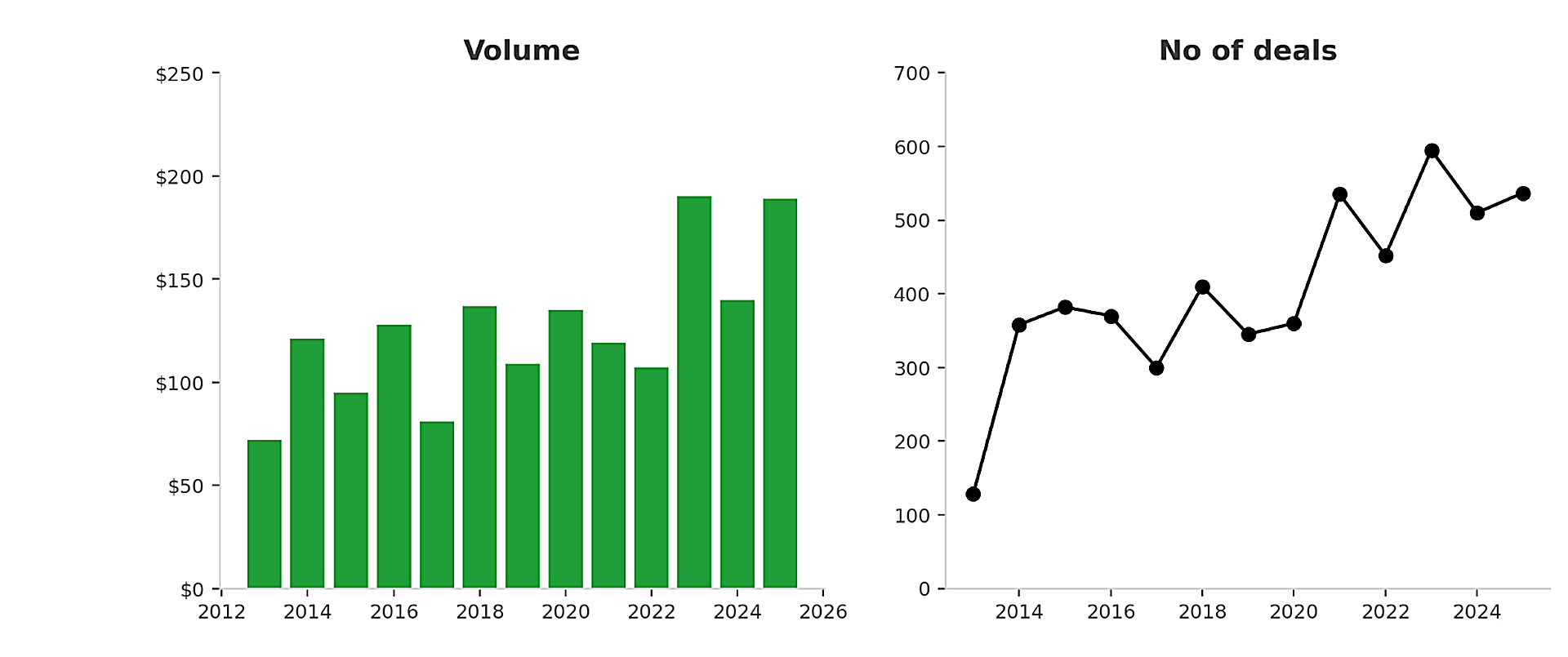
Figure 1: ECA core market annual performance, 2012–2025
Source: TXF Intelligence Export Finance Research Report 2026
No longer “the elephant in the room”, defence, continued Zakai, is seeing consistently strong volumes year-on-year. TXF Intelligence’s Export Finance Research Report 2026 notes, “Defence has travelled from the periphery to the centre of the market in the space of a single survey, driven by European rearmament and the swelling of public budgets.” It is expected to be the largest sector in 2026. This aligns with the findings of Deutsche Bank Research’s Euro area outlook in December 2025.
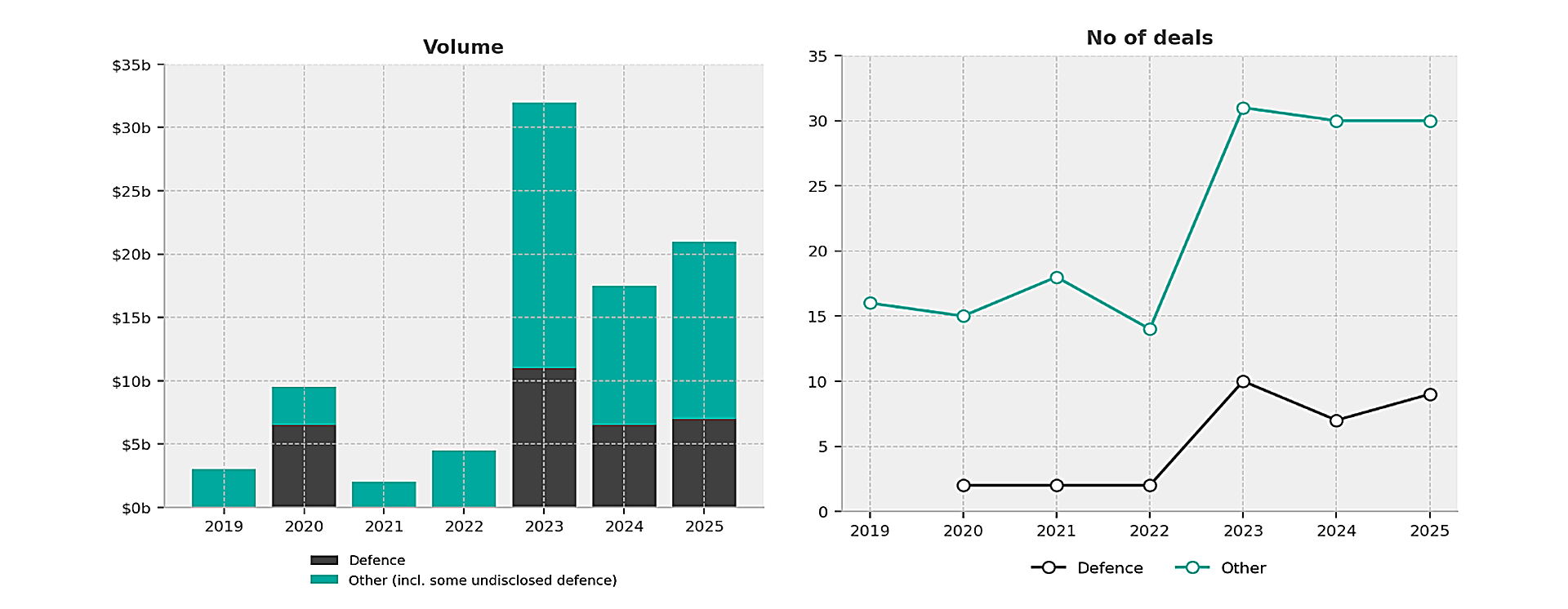
Figure 2: Defence is now seeing consistently high volumes
Source: TXF Intelligence Export Finance Research Report 2026
Other trends identified in the report include the purported easing of ECA caution regarding supporting oil and gas projects, the claim that nuclear energy is “winning fans”, and the suggestion that ECAs are stretching their mandates into critical minerals, domestic and untied cover, and direct support for SMEs.
The data also points to the US leading the way in export and project finance projects – see Figure 3. “How can Europe respond to that?” asked Zakai – echoing the questions around European competitiveness addressed in a previous flow article.
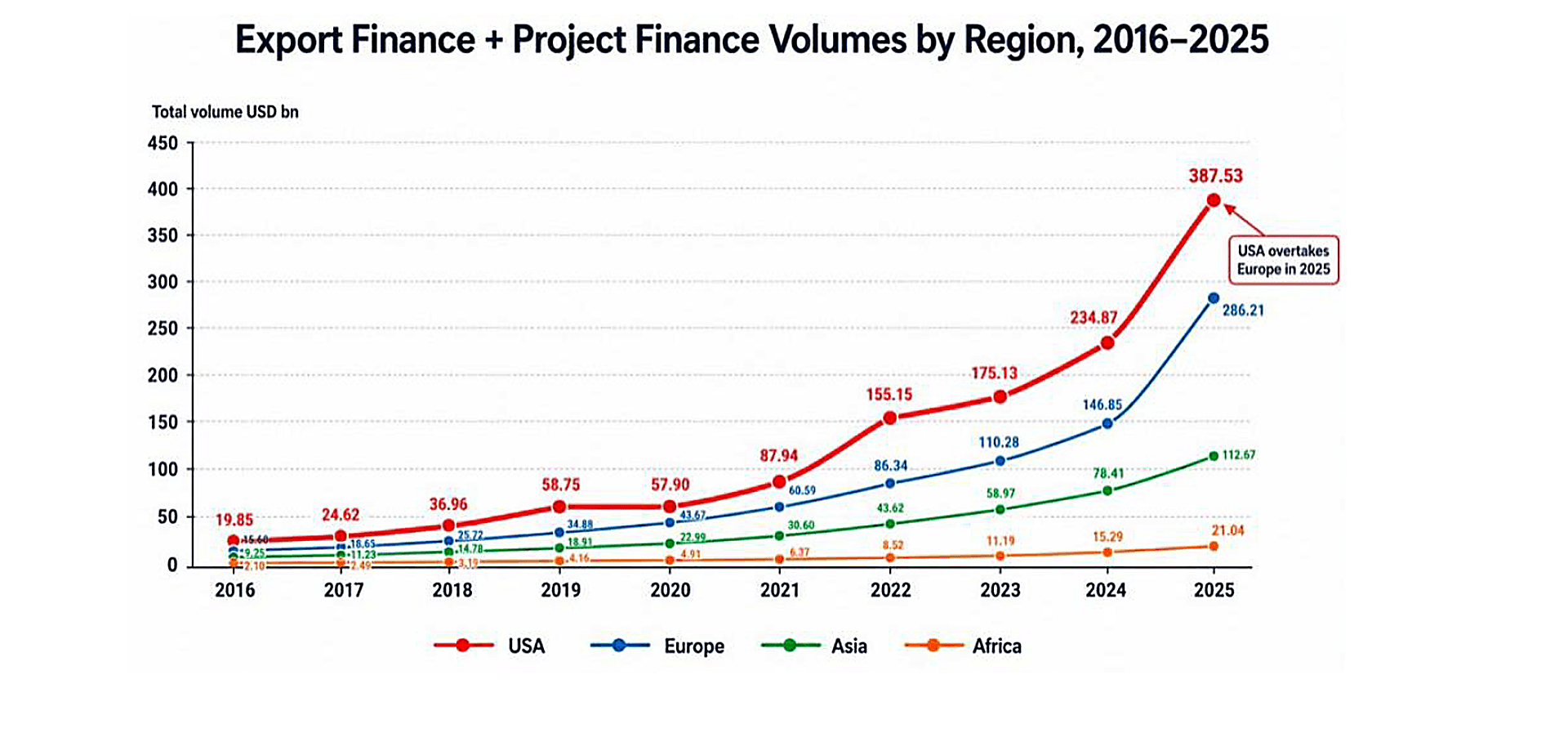
Figure 3: The US leads the way across export and project finance
Source: TXF Intelligence Export Finance Research Report 2026
Update on the OECD Consensus
A central element for creating a level playing field in export finance is the OECD Arrangement on Officially Supported Export Credits (commonly known as the OECD Consensus).
It was established in 1978 to promote fairness among exporting countries by setting common rules for government-backed export finance, so as not to stray into export subsidy and trade distortion territory. The framework limits what ECAs can offer in terms of tenor, repayment terms, interest rates and premium charges, ensuring that competition in the market is based on the quality and price of the exported goods – not on the conditions of financing them.2
On 22 January 2026, the framework was updated to keep pace with, as the OECD puts it, “evolving market realities”, but it remains “a practical and efficient instrument to help businesses export and invest overseas”.3 Current member countries are: Australia, Canada, the European Union, Japan, the Republic of Korea, New Zealand, Norway, Switzerland, Turkey, the UK and the US.
As flow explains in section 5.4 of the Guide to Trade Finance (2nd Edition), “the need to address a wider set of challenges well beyond the traditional export finance space has resulted in a more diversified ECA landscape, in particular, related to untied instruments among the ECAs toolbox”. This aligns with the Export Finance Research Report 2026 findings that ECAs are stretching their mandates towards more untied cover.
How ECA heads see the market
Among the popular regular sessions at the annual TXF Global conference is the discussion between ECA heads around what they are being asked to do, how they work with lenders and exporters, and what the impacts and outcomes have been. The ECA CEO Outlook – Mandates, Markets, and the New Strategic Landscape panel featured the heads of the UK, Australian, Canadian and German ECAs.
The common denominator in the reflections was how the role of the ECA has become much more active in terms of origination and ‘getting out there’, as well as partnering with other institutions because of the sheer size of the transactions they are being asked to support. All this carries with it the need to get new skills into the organisation and adapt to a new culture.
“We are all being asked to find ways to either spearhead economic growth or encourage economic resilience,” said Tim Reid, CEO of UK Export Finance (UKEF). He explained that ECAs are being pushed to think about finding new ways to not only support their own supply chains, but development around the world as well. UKEF capacity has, he said, expanded, and this “gives us the ability to do more”. Reid also confirmed that defence had become an expanded part of UKEF’s mandate: “Economic security is key. It is about our industrial strategy and how we can play an even more important role in delivering our government’s agenda.”
Alison Nankivell, President and CEO of Export Development Canada (EDC), explained that her country has a slightly different mandate compared to UKEF, because there are a lot of small and mid-sized exporters that EDC supports.
While EDC has always supported Canadian companies abroad – for example, in setting up operations, or conducting mergers and acquisitions – more recently the focus has been on “building and supporting trade and enabling infrastructure” on home soil. Given that most Canadian trade is with the neighbouring US, EDC has been focusing on building out ports, rail networks and energy facilities, so that capacity is there.
One area of commonality with other ECAs is a focus on critical mineral-producing countries. “It’s about building the capacity for the sectors of the future that you see are going to be essential to your economic prosperity,” Nankivell said.
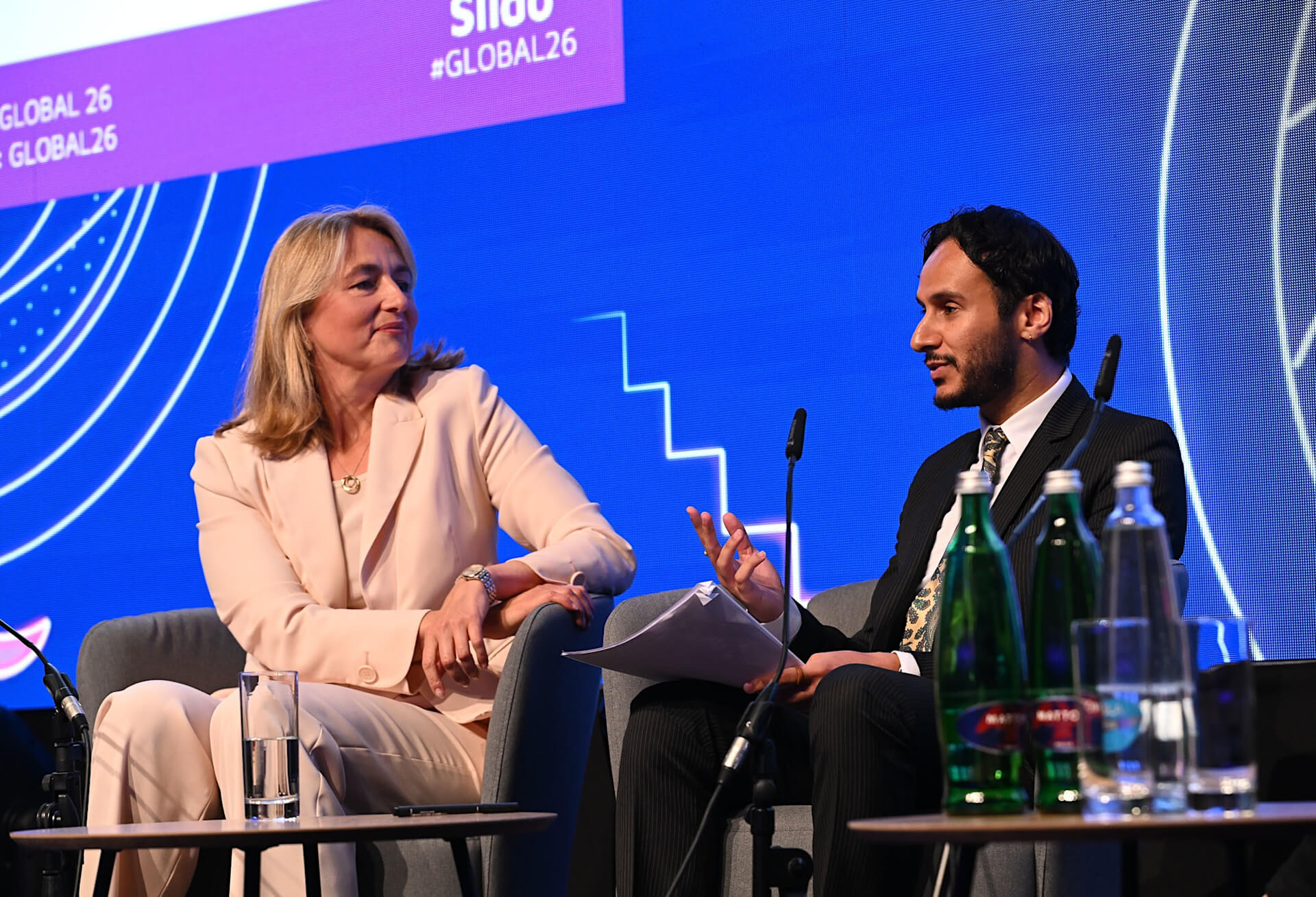
Euler Hermes’ Edna Schöne and TXF’s Hesham Zakai reflect on the change of emphasis from risk management and guarantees to deal origination
Germany’s ECA Euler Hermes has seen three major changes, reflected Edna Schöne, CEO of ECA Business, Euler Hermes Aktiengesellschaft. These are:
- Becoming a strategic, proactive ECA that is “out there”, rather than an insurer only sitting behind the exporter – so moving from being primarily a risk underwriter to becoming an earlier and more strategic partner in supporting export opportunities
- Moving away from the single transaction focus towards partnerships with key economies and banks – as well as Engineering, Procurement, and Construction projects (EPCs). “Germany is very good at technology while large-scale EPC capabilities are often provided through international partnerships, so partnering with international EPCs makes more business happen for Germany,” she noted.
- Operating as part of “Team Germany”; for example, partnering with institutions such as KfW Bank to leverage what can be brought to the partner countries of Germany’s exporters.
“‘Team Germany’ is becoming really important for us, but so is ‘Team Europe’. European competitiveness is really gaining a lot of momentum right now,” said Schöne. She added that the shift from transaction towards strategic partnerships and trade creation has meant getting different skillsets into the organisation and changing its culture.
One shining example of this sea-change in European momentum was the €1bn Green Shopping Line facility for French multinational Engie – the first shopping line deal of this size for Euler Hermes – which was signed by Schöne at the utility company’s Paris headquarters on 26 May 2026.4
John Hopkins, CEO of Export Finance Australia (EFA), made a point regarding the speed at which ECAs are being asked to deliver. He cited the example of the Middle East crisis, which saw EFA “learn very quickly how to build new capabilities on behalf of the Australian government; we were given an import financing power for the first time”. He said that it took about two weeks before EFA started purchasing its first cargo of fuel.
When it comes to securing critical minerals, EFA has had to move from being just a debt provider to “providing equity on our national interest account”. He elaborates: “So that was the government supporting equity investments into critical minerals transactions – again a few weeks ago we were given a commercial equity financing power.”
He concurred with Schöne’s point that the organisation has had to be upskilled in recent years in response to a fast-changing industry: “You have to build an equity finance capacity and an asset management function to manage the investments.”
Moritz Doernemann, Deutsche Bank’s Global Head of Structured Trade & Export Finance, who spoke to flow after the event, stressed the vital role ECAs play in supporting global trade.
“Governments and banks share a strong interest in creating the conditions for global trade to thrive,” he said. “ECAs are essential to enabling trade flows, particularly in emerging markets and for large-scale infrastructure projects. Despite an uncertain operating environment, our commitment to supporting exports and serving as a reliable partner to ECAs remains unwavering.”
TXF Global 2026: Export, Agency & Project Finance took place from 9–11 June 2026 in Prague, Czech Republic. All data is sourced from TXF Intelligence.
Clarissa Dann is the former Editorial Director of flow and an expert in trade finance, having previously been Editor in Chief of Trade & Forfaiting Review magazine.
Sources
1 TXF Intelligence’s Export Finance Research Report 2026, based on TXF data and survey insights from 460 responses collected between January and April 2026
2 See Arrangement and sector understandings at oecd.org
3 See Towards a More Competitive Framework for Export Finance: OECD Export Credits Consultation at businessatoecd.org
4 See ENGIE secures €1B export financing backed by Euler Hermes at dealroom.co


You might be interested in
Trade finance and lending, Macro and markets
What next for global energy? What next for global energy?
With a negotiated settlement to end the war in Iran not as yet confirmed, what does this mean for global trade with energy prices at current levels? flow’s Clarissa Dann examines insights from Deutsche Bank Research and key international agencies and reflects on what this means for trade finance demand
Trade finance and lending, Macro and markets
Commodities 2026: the Hormuz factor Commodities 2026: the Hormuz factor
The commodity finance community gathered at TXF Amsterdam 2026 to examine how recent events in the Middle East have impacted the trading, producing and financing of key commodities. flow’s Clarissa Dann reveals how traders are diversifying their funding sources and strategically utilising their facilities

Trade finance and lending
Meeting the Middle East’s taste for British cheese Meeting the Middle East’s taste for British cheese
With the UK-Gulf Cooperation Council (GCC) free trade agreement signed, British exporters have a fresh route into fast-growing Middle East markets. But what support can its exporters call upon for those products that have a long gestation period? flow’s Clarissa Dann finds out at GTR UK 2026