
-

flow case studies, Cash management
Allseas: Pioneering offshore construction
When Dutch-Swiss global offshore energy contractor Allseas expanded operations into Brazil, its treasury team faced new challenges around onshore/offshore conversion, funding alignment and documentation frameworks. flow’s Clarissa Dann reports on how Deutsche Bank helped to provide an integrated solution
MINUTES min read
Allseas is a privately owned company, founded in 1985 by Edward Heerema, and delivers solutions for subsea pipelay and construction, along with the transport, installation and removal of offshore facilities.
Headquartered in Châtel-Saint-Denis, Switzerland, the Dutch-Swiss global offshore energy market contractor’s mission is to “shift boundaries of offshore technology”. It sees itself as a “sustained frontrunner through technical ingenuity and entrepreneurial spirit”, while operating in a safe, sustainable and responsible way, “delivering superior service to our clients”.
During discussions for this case study of cross-border cash management solutions to support Allseas’ expansion into Brazil, the company told flow that it is “prepared to take calculated business risks and to make significant investments for long-term success, prioritising long-term relationships over short-term returns”. In short while it strengthens core activities, it also has its sights set firmly on the future and the opportunities for expansion into new markets.
Leading force in innovation
Allseas' philosophy is built on the belief that if a technical concept is truly superior, it will be economically viable and ideally create a market of its own. By developing most of their technology in-house, they remain independent and, explains the company, “a leading force in innovation”.
Over 40 years, Allseas has remained at the forefront of offshore innovation by “transforming bold ideas into proven technologies to meet the market’s ever-changing needs”. Designed and optimised in-house, the versatile fleet of innovatory pipelay, construction and support vessels reflects the company’s commitment to performance, efficiency and safety.
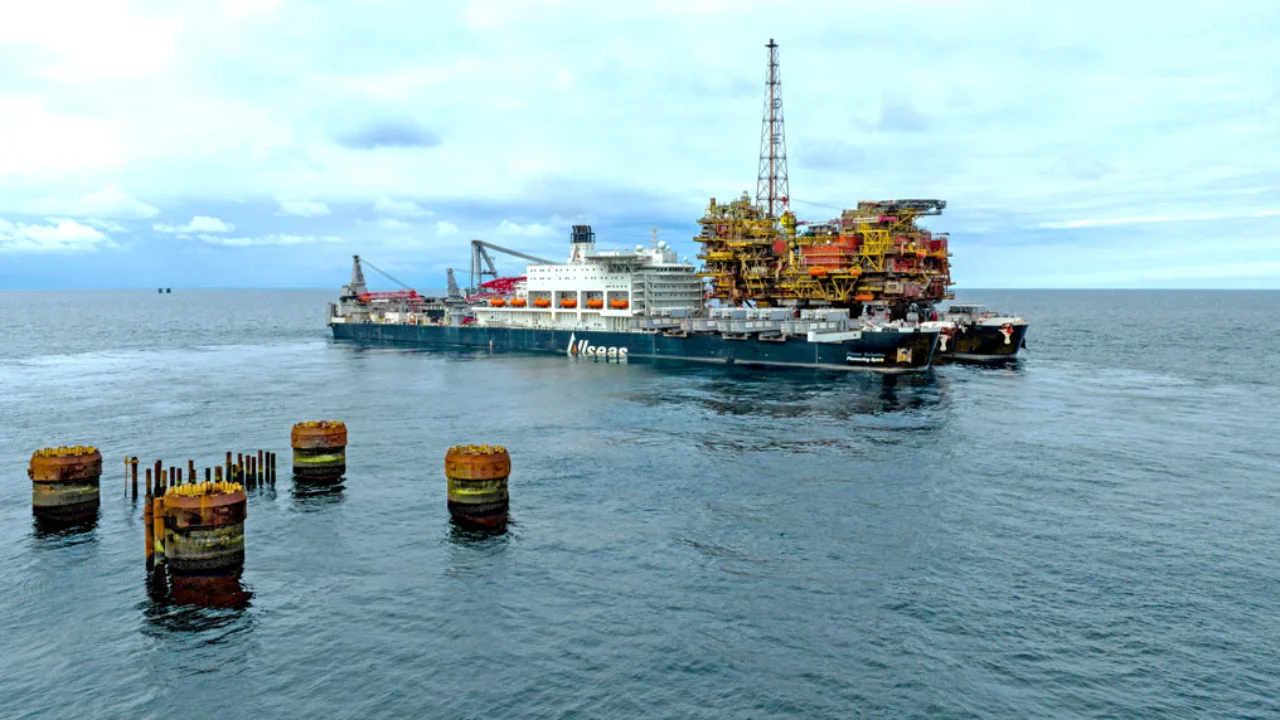
Photo © AllSeas. Pioneering Spirit at work at the Shell Brent platform
Pioneering spirit – a transformative leap
When it comes to decommissioning and installing large offshore oil and gas platforms, the world’s largest construction vessel Pioneering Spirit is a good example of how Allseas has driven change through innovation. Purpose-built for single-lift installation and removal of entire topsides up to 48,000 tonnes and jackets up to 20,000 tonnes, this was a concept that first originated in 1986 just after the company’s launch.
The ‘topsides’ are essentially the functional heart of the platform, containing all the equipment, facilities, and living quarters necessary for drilling, production, processing, and personnel support. The ‘jackets’ comprise the steel lattice framework that forms the substructure supporting the topsides. In other words, these are the legs and bracing that hold the platform's working parts above the water.
After 25 years of research and design, construction of the dynamically positioned platform installation/decommissioning and pipelay vessel started in 2010. The commercial breakthrough came with the award of the Shell Brent platforms decommissioning contract in 20131 and Statoil’s (now Equinor) contract award for the first phase of its Johan Sverdrup North Sea oil field development in 2015.2
Pioneering Spirit executed her maiden heavy lift project on 22 August 2016, removing the 13,000- tonnes Yme mobile offshore platform unit topsides for Repsol Norge AS. Furthermore, the vessel has positioned Allseas as a key enabler of Europe’s offshore wind expansion. To date, says the company, Pioneering Spirit has installed converter platforms supporting 4.2 gigawatts (GW) of European renewable energy capacity and is set to contribute to the delivery of more than 30GW of clean power to homes and businesses across Europe in the coming years.
Brazil expansion
In December 2024, Allseas was awarded a contract by the Brazilian national oil company Petrobras, marking the company’s return to Brazil. This was for Búzios-10 – one of the largest offshore pipeline installation projects in Allseas’ four-decade history – and covers the design, procurement, construction, and installation of subsea infrastructure for the Búzios-10 pre-salt field, located around 180km off the coast of Rio de Janeiro.3 Petrobras awarded a follow-up contract, announced in November 2025, to provide a subsea solution with rigid risers for the Atapu-2 pre-salt field, this one being 230km off the Rio coast.4 These projects represent some of the company’s largest and most technically complex pipeline installation campaigns to date.
To support this expansion into Brazil, Allseas has reinforced its new project management and engineering office in Rio de Janeiro, which will serve as the strategic hub for its Brazilian operations.
“Centrally managing Brazil’s regulatory and operational environment brings new and unique challenges”
What does this mean for the corporate treasury team? Working for an international project-driven organisation, the team is used to adjusting its processes and delivering solutions that support each project. “Managing treasury operations in Brazil, however, presents new challenges,” says Maaike Vermeulen, Group Treasurer at Allseas. These include currency restrictions together with complex tax regulations and regulatory reporting requirements. As a result, moving funds in and out of the country to support business operations is far from straightforward.
Currency restrictions and FX complexities
Like many emerging market economies, Brazil employs currency restrictions to manage its economy – to control inflation, avert capital flight and to deter currency speculation. While cross-border trade is encouraged (Brazil’s total exports for 2024 were a record US$337bn5 ), the fact that all cross-border payments must be made in a hard currency (as BRL cannot be held offshore) adds complexity for treasury teams worldwide.
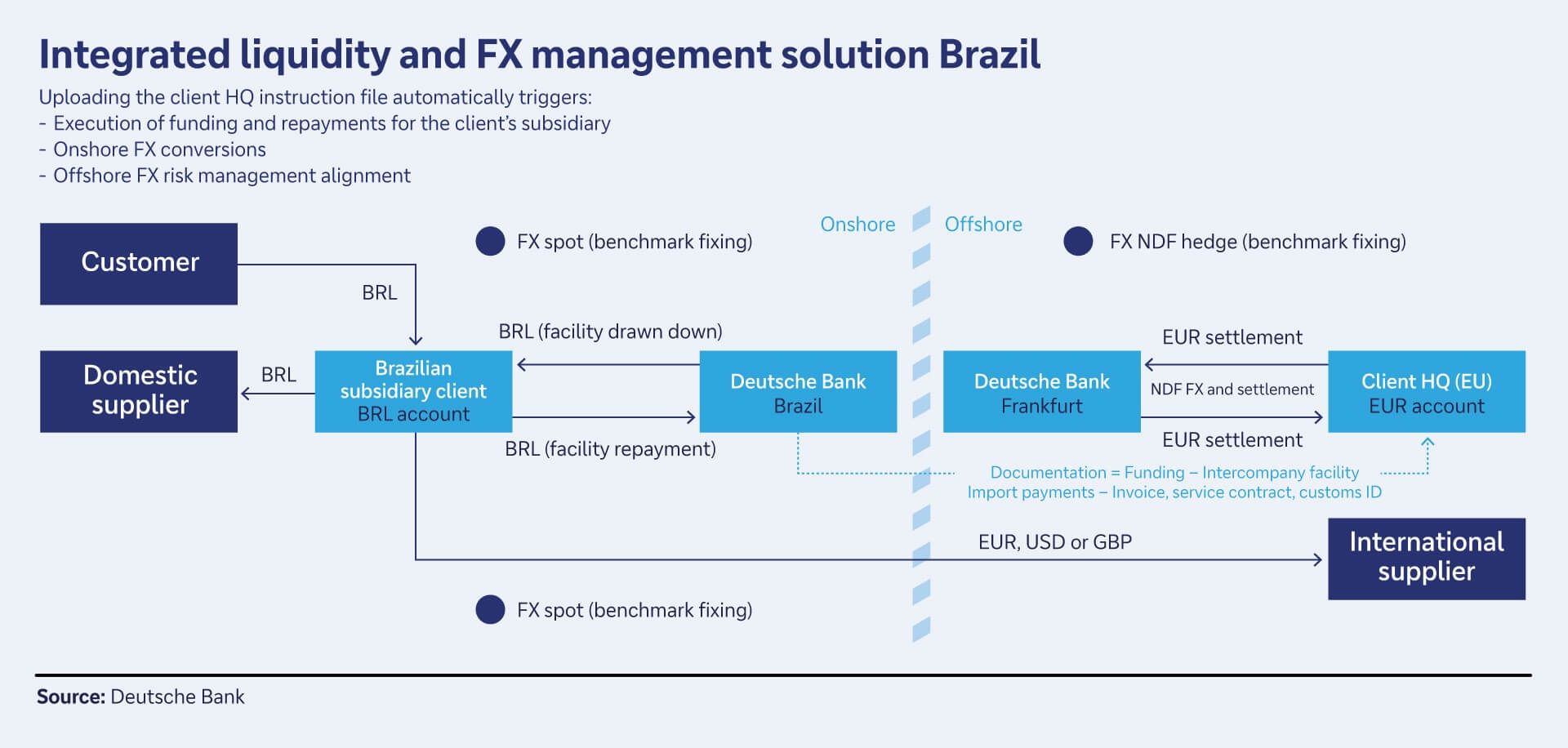
Figure 1: Integrated liquidity and FX management solution Brazil
Source: Deutsche Bank
Allseas is managing its FX exposures at group level. “The subsidiary’s working capital is funded in EUR by an offshore group entity and fluctuates in line with project needs. At the same time, project related inflows and outflows occur in multiple currencies onshore, which creates a continuous need for FX conversions on both the on- and offshore market,” explains Treasurer Manuel Kampman. These, he adds, “need to be actively managed”.
With the BRL this can be done through non-deliverable forward (NDF) transactions, a standard and liquid hedging instrument in the offshore market. However, the simultaneous alignment of local FX conversions with offshore NDF trades remains a challenge. This is because funding the Brazilian subsidiary requires an onshore conversion from EUR into BRL, while at the same time the group executes an offshore NDF in the opposite direction — selling BRL and buying EUR — effectively creating a swap. Even if both transactions are executed on the same day and only minutes apart, any timing difference can introduce unwanted basis risk.
“The overall outcome was efficient liquidity and FX risk management in Brazil while demanding only minimal internal resources from our treasury team”
“Before, handling both the local FX trades and the corresponding offshore hedges required executing several transactions at the same moment, creating an operational workload that was difficult for a small treasury team to manage efficiently,” says Kampman.
Deviation in the timing of hedged cash flows – not least because of likely delays in completing all the regulatory requirements – means outstanding hedges may need to be rolled over to remain protected against exchange rate movements. This involves a manual tracking of onshore documentation completion.
Regulatory and tax issues
To satisfy Brazilian local regulations, Allseas must provide evidence that there is a true economic underlying when processing cross-border payments. This could be an import/export invoice or an inter-company financing agreement. Each transaction has to include a purpose code (natureza da operação) that describes the reason for the payment and must match the information on the invoice or contract.
Next, the regulator wants to ensure that imports and exports are properly declared at customs, so besides invoices, customs declaration forms and protocol numbers must be provided. Furthermore, Brazil applies taxes on a wide range of financial activities, including FX operations. As each cross-border transfer always involves FX, and the tax rate depends on the underlying economic activity (such as goods, services, royalties etc.), determining the correct levy for each payment adds to the complexity.
Because of all these challenges, many corporations only process cross-border payments monthly, which can lead to liquidity building up onshore, tying up company resources. In addition, when tax classification and documentation are handled by a local third party operations agent, this adds cost, creates inefficiencies, and introduces another participant into the payment chain.
Liquidity and FX management solution
Deutsche Bank helped Allseas streamline its financial operations by simplifying FX execution and settlement based on master agreements and pre-agreed rules/benchmark fixing rates, integrating them with the bank’s HausFX engine to minimise execution time and treasury resources, with the central reporting transferred to the bank.
“These changes resulted in better risk coverage, lower conversion costs and enhanced transparency for future project bids”
This includes a streamlined process to support the alignment of economic underlying, customs and tax classification; a flexible liquidity solution for project-driven cashflows; automated cross-border payments with reduced workload; and fully integrated onshore/offshore FX conversions through a centralised hedging programme, eliminating the base discrepancy between the offshore and onshore markets.
“These changes resulted in better risk coverage, lower conversion costs and enhanced transparency for future project bids due to pre-agreed margins,” says Harald Abel, Co-Head Workflow Solutions at Deutsche Bank. Kampman agrees, “The overall outcome was efficient liquidity and FX risk management in Brazil while demanding only minimal internal resources from our treasury team.”
For Vermeulen, the realised efficiency gains were essential: “Brazil was taking a lot of time, especially funding and repatriating cash. Now with this solution it’s highly automatised and fits perfectly – not only for the team, but also for Allseas as an innovative company,” she reports.
Replicability: beyond Brazil
While Brazil presented unique challenges, the approach offers lessons for other restricted or emerging markets. “Every country has different regulations, so you can never copy a solution one-to-one,” says Kampman. “But the principles we used – onshore/offshore conversion, funding alignment, documentation frameworks – can definitely be applied elsewhere depending on the specific environment.”
Lead image: Photo credit: Allseas – Pioneering Spirit BorWin epsilon offshore converter platform in the North Sea
Sources
1 See Shell has awarded Allseas the topsides and jacket removal contract for the Brent field platforms at allseas.com
2 See Johan Sverdrup contract to «Pioneering Spirit», the world’s largest heavy-lift vessel at equinor.com
3 See Allseas expands in Brazil with Búzios-10 at allseas.com
4 See Petrobras and Allseas sign contract for Atapu 2 at brazilenergyinsight.com
5 See Trade balance surplus was USD 74.5 billion in 2024, second-best result in historical series at gov.br


You might be interested in
flow case studies, Cash management, Trade finance and lending {icon-book}
Brazil’s gateway to global trade Brazil’s gateway to global trade
How can Brazilian businesses finance cross-border trade in a volatile global landscape? Drawing on the example of Banco do Brasil – the country’s second-largest bank – flow explores the role that correspondent banking plays in enabling these transactions
Trade finance and lending, Macro and markets {icon-book}
The trillion-dollar ocean The trillion-dollar ocean
Dr Rebecca Harding looks at the issues in – and beneath – the Arctic Circle and its impact on the global economy

Macro and markets, Trade finance and lending
The world outlook 2026 – never a dull moment The world outlook 2026 – never a dull moment
Drawing on the Deutsche Bank Research annual next-year World Outlook, flow looks forward to a year of cautious optimism, with growth accelerated by AI adoption, clearer trade strategies, fiscal stimuli, and investment in security and infrastructure