
-

flow case studies, Cash management
Building the treasury backbone for NBFIs
Flow Capital Partners’ growth story highlights a wider treasury question for non-bank financial institutions: how to support cross-border investment flows with speed, resilience and risk discipline. COO Stephen Yeung shares his views with flow’s Desirée Buchholz and treasury correspondent Graham Buck
MINUTES min read
Hong Kong SAR-based Flow Capital Partners was established in 2019 in a way that says much about the Asian private credit market. It was not launched from a theoretical whiteboard exercise, but from a series of calls to founder Sam Lau from borrowers and intermediaries seeking short-term liquidity for real estate projects.
Lau – described as a serial entrepreneur and a former investment banker at Deutsche Bank – had spent years building relationships across Hong Kong SAR's real estate and finance community. In 2016, Lau had founded Heungkong Financial Group (later renamed Futec Financial Group) which offered investment banking, brokerage, securities and investment management services in the financial hub.1
In the early days, those relationships were the deal flow for Flow Capital Partners. “It was only after enough of those deals came through, that we recognised what we were actually looking at: a structural gap, not a string of one-offs,” reports Chief Operating Officer Stephen Yeung in an interview with flow. Yeung, who joined the firm from Nexus Investment Advisers in April 2025, adds: “Banks were pulling back from mid-market lending as capital requirements tightened, and the large funds were too big to efficiently underwrite transactions at this scale.” Around the same time, Jacky Tian joined as Chief Investment Officer, having previously worked for over 10 years at Oaktree and Goldman Sachs in Hong Kong SAR.
Historically, credit supply in Asia-Pacific (APAC) is heavily bank-driven, with banks still controlling 75% of the market. At the same time, public capital markets remain underdeveloped, contributing just 14% of global bond issuances despite APAC’s large share of global GDP.2
The gap between limited credit supply for mid-sized companies and rising demand for flexible capital amid strong economic growth makes APAC increasingly attractive for private credit solutions. Consequently, the APAC private credit market is projected to grow from US$59bn in 2024 to US$92bn by 2027, according to a report from the Alternative Investment Management Association.3
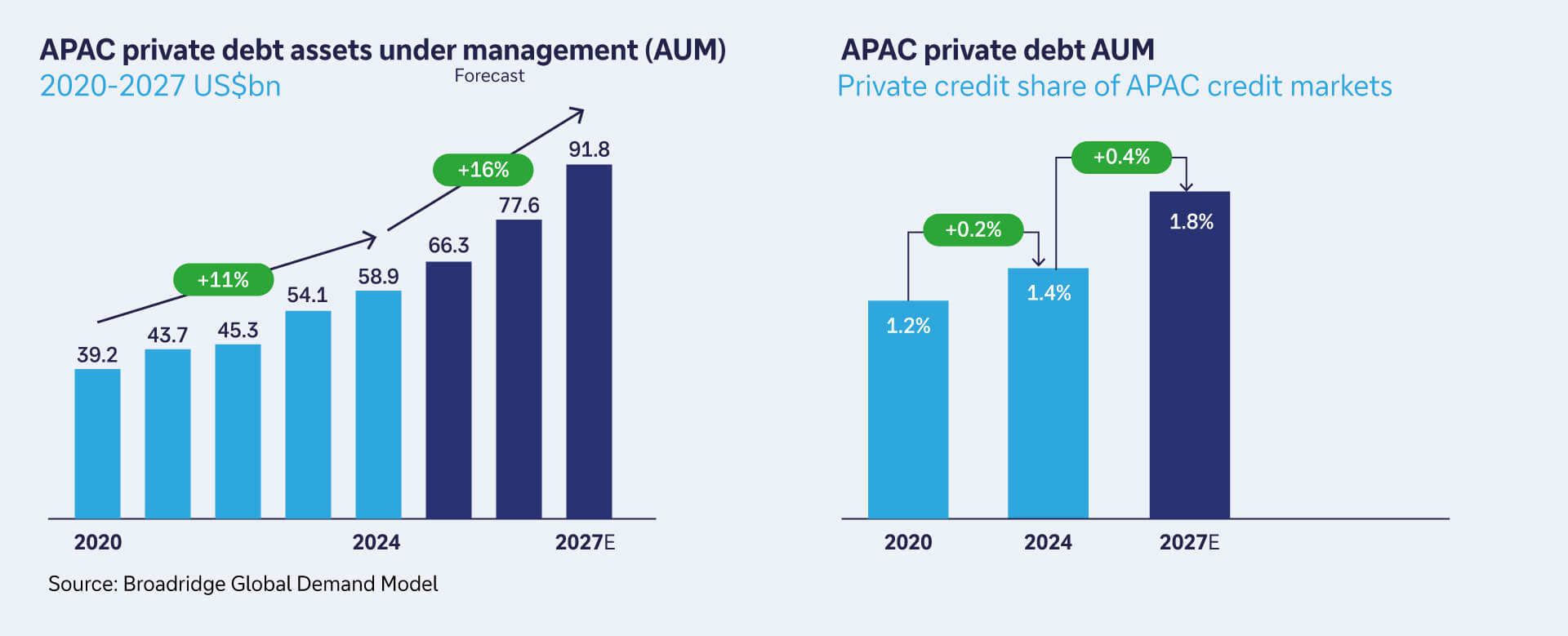
Figure 1: Growth of the Asia private credit market
Flow Capital Partners positioned itself in that gap – and seven years after its foundation, the firm has grown into an institutional alternative asset manager focused on full-spectrum credit investment across APAC. Its strategy is sector-agnostic but anchored in structural complexity: senior secured lending, real estate-backed credit, asset-backed finance, sponsor-backed financing, platform financing, cross-border financing and special situations, with a typical ticket size of between US$10m and US$50m, extending to US$100m for select transactions alongside Limited Partners (LP) co-investment.
By mid-2025, the firm had participated in 20 investments with a total transaction value of about US$871m via a deal-by-deal basis. In June 2025, it launched the Flow Credit Master Fund with US$125m of seed capital, marking a shift from deal-by-deal origination towards a fund-based platform.4 Since launch to date, the open-ended fund has invested US$234m across 13 deals; with three deals (US$57m) already matured and returned. US$177m remains actively invested – bringing total sourced and managed investments since 2019 up to US$1.1bn.
“Currently, most of our investors – which are small institutional investors and high-net-worth-individuals – are based in Asia, but we are actively expanding our reach: registration processes are underway in Korea, and we're evaluating market entry opportunities in Europe,” explains Yeung. “While our investment focus is Asia Pacific private credit, we believe the strategy has strong appeal to global investors seeking exposure to the region's growing private credit market.”
Working with Deutsche Bank
Flow Capital’s relationship with Deutsche Bank began as the firm was building its private credit platform in 2025. The requirement was not only for a bank that could open accounts and process payments, but also one able to support the operational framework of a growing investment manager: custody, liquidity visibility, payments execution, FX and scalable controls.
“We wanted a banking partner capable of supporting both our immediate treasury needs and long-term growth ambitions,” confirms Yeung, who had worked with Deutsche Bank in his previous roles and was familiar with its cash management and alternative asset manager capabilities. “The partnership has been built on a shared understanding of the needs of private market investment firms, and Deutsche Bank continues to be a valuable strategic banking partner as we develop and strengthen our treasury operations.”
The relationship initially centred on core banking and cash management. As Flow Capital’s business model evolved, it broadened to include support from Deutsche Bank’s Trust and Securities Services teams, including post-trade settlement and custody for the Flow Credit Master Fund launched in June 2025, safekeeping fund assets under a formal custody agreement.
“When we started, this business ran on relationships and instinct. Getting to where we are now meant building the infrastructure to match our ambition – solid controls, a licensed custodian, institutional-grade reporting. Excellent infrastructure is not a ‘nice-to-have’ at our stage, it's the difference between a deal-by-deal shop and an asset manager that can underwrite at scale,” says Sam Lau, founder of Flow Capital Partners.
Through Deutsche Bank's CustodyOne model, the client gains access to a global custody network while maintaining a single relationship and service interface in Hong Kong SAR. This allows Flow Capital to interact with one local team while investing across multiple offshore markets.
Why NBFI treasury is different
"Treasury management at a non-bank financial institution (NBFI) differs significantly from treasury management at a traditional corporate," explains Yeung. “While corporate treasury typically manages payroll, supplier payments, working capital and liquidity across multiple operating subsidiaries, treasury at a private credit manager sits closer to the investment engine."
“One of the key challenges for NBFIs is ensuring that funds are available and transferred precisely when required”
He continues: “One of the key challenges for NBFIs is ensuring that funds are available and transferred precisely when required. A delayed payment or settlement can have significant consequences, potentially affecting investment transactions, borrower relationships or investor confidence. In some cases, failure to meet contractual funding timelines could even expose parties to legal or commercial disputes.”
That makes timing and certainty central. For NBFI treasurers handling high-value investment flows within a regulated environment, cash visibility is more than a reporting convenience; it is a control requirement.
FX adds another layer. As Flow Capital invests across APAC and engages with a more international investor base, transactions increasingly involve four different currencies – most prominently Offshore Renminbi and Australian Dollar. The treasury function has to support FX execution while maintaining clear visibility over cash positions and settlement flows. For an NBFI, this is also linked to risk: operational risk, market risk, counterparty risk and the reputational risk of failing to execute when expected.
Regulation is part of the same picture. Flow Capital operates from Hong Kong SAR and is expanding investor access across other jurisdictions, meaning fund distribution, onboarding, due diligence and reporting requirements vary by market. The firm’s treasury and operations teams have to work within those constraints while preserving speed of execution – a balance that is especially important in private markets, where deal windows can be narrow.
A new treasury set-up to support fund lifecycle management
Despite these challenges, Flow Capital does not yet operate a standalone treasury department. Given its stage of growth, treasury responsibilities sit within a focused governance structure, explains Yeung. “Cash management, liquidity planning and banking relationships are owned jointly by our Head of Finance and Head of Operations & Risk, with oversight built directly into our broader risk framework.” But, as assets under management grow, the COO says a dedicated treasury function is a natural next step under evaluation.
Flow Capital uses Broadridge’s platform to support fund operations, cash management and reporting rather than a standalone treasury management system. Deutsche Bank provides the banking layer: digital account access, payment processing, FX capabilities and cash visibility. “Together, these systems provide the visibility and controls required for our current treasury and operational needs,” Yeung says.
In practice, the treasury set-up implemented in 2025 and 2026 is designed around four elements:
- Dedicated fund account structures to ensure regulatory-compliant cash segregation and efficient reconciliation across all investment vehicles.
- Straight-through processing for time sensitive capital market transactions and vendor payments, ensuring timely execution and reduced operational risk.
- Automated FX and risk management solutions tailored to diverse investment types, enabled for cross-currency transactions without manual intervention, accelerating transaction cycle.
- Improved transparency and strengthened security through preferred Swift integration. Payment files are sent through secure processing channel to ensure safe handling of all payment flows, supporting regulatory compliance and reducing operational risk.
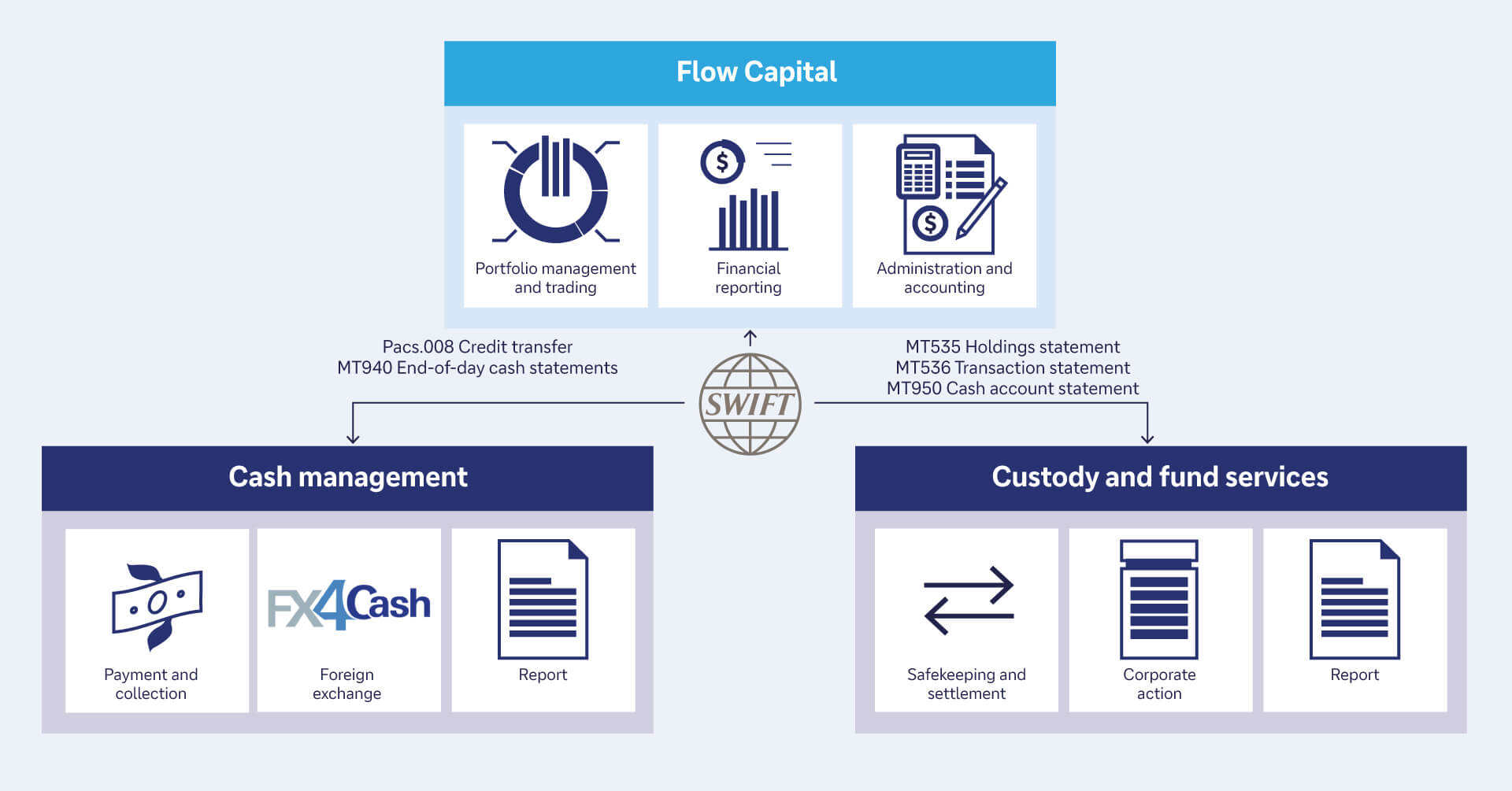
Figure 2: Flow Capital’s treasury model
Source: Deutsche Bank
According to Yeung, Flow Capital tracks treasury performance through settlement timeliness, payment-processing efficiency, cash visibility, transaction accuracy and responsiveness to operational requests. Since implementing Deutsche Bank’s cash management and banking solutions, the firm says it has been able to meet operational requirements for payments, fund flows, trade settlements and FX-related transactions consistently and on schedule. “When we used local banks, we often had to deal with payment failures and delays of up to three to four days”, says Yeung. “From the day we worked with Deutsche Bank we have had 100% settlement accuracy and timeliness.”
In May 2026, Flow Capital Partners was awarded Best Solution – Liquidity and Investments, Hong Kong SAR at The Asset Triple A Treasury & Trade Awards 2026 for this cash management infrastructure.
What comes next
Flow Capital’s next phase is about turning early momentum into an institutional track record. The Flow Credit Master Fund gives the firm a diversified structure through which to invest across APAC private and public credit. In April 2026, the firm has made the Fund available on DigiFT Tech Pte.'s Singapore-based blockchain platform, “positioning the firm among the first Asian private credit managers to offer tokenised fund access to stablecoin investors”.5
Yeung frames the growth objective cautiously. The firm aims to build assets under management towards the US$300m level and maintain similar growth ambitions through 2026 and 2027, but not at the expense of credit quality or operational control. “We are focused on growing responsibly, maintaining investment discipline, preserving credit quality and ensuring that our operational and risk management capabilities evolve alongside the business,” Yeung explains.
For Flow Capital Partners, treasury is now part of that growth story. As the firm expands across markets, currencies and investor segments, treasury will have to support more complex fund flows without losing the speed and precision that private credit requires. The case is also a useful reminder for NBFI treasurers more broadly: in a market where capital can move quickly but confidence is built slowly, operational reliability is not a back-office detail, it is inextricably part of the product.
To find out more about Deutsche Bank’s treasury solutions for NBFIs click here.
Sources
1 See Sam Lau at milkeninstitute.org
2 See Asia Private Credit Rising potential in growth economies in Asia at allianzgi.com
3 See New Report Highlights Asia-Pacific’s Rising Role in the Global Private Credit Landscape at simmons-simmons.com
4 See Asia's Private Credit Specialist at flowcp.com
5 See Flow Capital Partners — 亚洲常青私募信贷专家 at flowcp.com


You might be interested in

Cash management, Trust and securities services
Working with NBFIs Working with NBFIs
Non-bank financial institutions (NBFIs) and the rapid growth of private markets offer investors an opportunity to diversify their portfolios, but what do they need in order to work safely within the financial system? flow’s Clarissa Dann and treasury correspondent Graham Buck set out the NBFI landscape and explain how regulated banks are supporting them

flow case study, Cash management
Inside PayPal’s treasury transformation Inside PayPal’s treasury transformation
Moving money is in PayPal’s DNA – which presents specific challenges for the treasury department. PayPal’s Group Treasurer Can Balcioglu tells flow’s Desirée Buchholz how his team modernised treasury infrastructure, applied AI and explored stablecoins

Trust and Securities Services, flow case studies
First Pacific: maximising long-term value for investors First Pacific: maximising long-term value for investors
Headquartered in Hong Kong SAR, First Pacific is one of Asia’s leading investment holding companies. How does it keep its own investors engaged and loyal? flow’s Will Monroe talked to John W Ryan, Group Chief Investor Relations Officer, to find out